July 1, 2026
What’s the Importance of Building Early Numeracy Skills for Your Child?
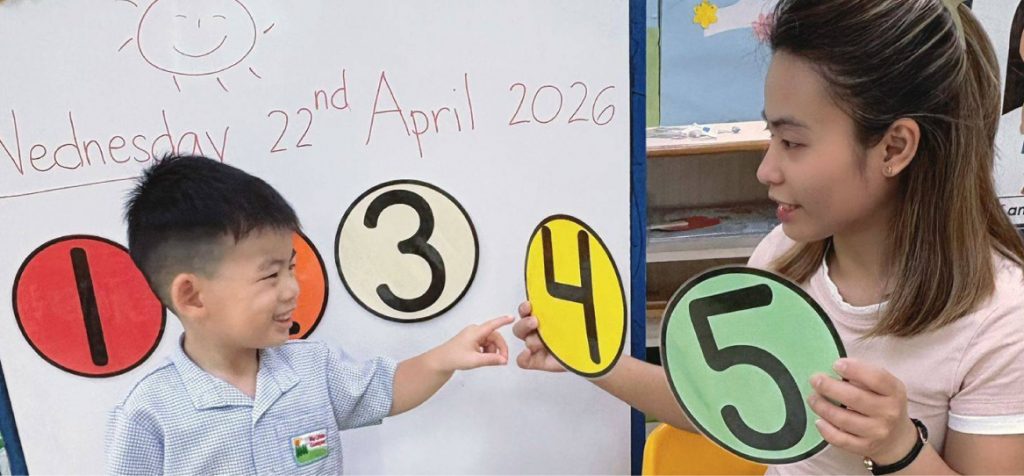
Parents often associate numeracy with counting or doing sums. In reality, early numeracy is much broader than that.
Early numeracy develops organically through everyday experiences long before formal math lessons begin in a structured classroom setting. This is why simple early numeracy activities at home can already provide a crucial base.
These foundational abilities are vital for building traits like logical thinking and self-confidence. By integrating basic math activities for toddlers and preschoolers into daily life, parents can thus support their child’s future growth in multiple ways.
What Are Early Numeracy Skills?
Early numeracy skills refer to a child’s ability to understand and practically apply mathematical concepts in daily life.
Rote counting is part of this, but so are recognition of visual patterns and size comparison. Item sorting and sequence understanding are involved as well.
Children typically develop these abilities gradually through daily play and normal household routines. These are often simple things that we might not even realise are highly educational, such as setting the dining table for the right number of people.
Another example is when a child sorts toys by type or size when putting them away. A child grouping wooden building blocks by shape is actively practising data classification!
These foundational actions help young ones make sense of the physical world in a natural, stress-free way. The more they interact with quantities and spaces, the more intuitive these spaces become.
Why Early Numeracy Matters in Child Development
Building early numeracy goes beyond future mathematical performance at school. It plays a significant role in the way a child’s brain processes complex information.

1. It Develops Essential Skills Like Logic and Reasoning
Working with numbers, shapes, and patterns can help develop a child’s logic and complex problem-solving. It also boosts a child’s working memory, sequencing abilities, and overall observational skills.
Developmental researchers have consistently highlighted that early math skills are linked to broader development. Some have even shown that early math achievement is the strongest predictor of a child’s future academic success and eventual workforce readiness.

2. It Builds Confidence in Learning
A strong grasp of numeracy can build self-confidence in learning, especially when children transition into formal educational settings like Primary 1. Early familiarity with numbers and logical patterns reduces the fear often associated with strict math subjects later.
Because of self-confidence, your child may be more willing to actively participate in class as a result. They may also view challenges as fun puzzles instead.
This is a critical mindset shift, as it transforms hurdles into approachable tasks instead of roadblocks.
3. It Supports School Readiness
Your child’s newfound confidence naturally supports overall school readiness. Because they can understand sequences and follow structured instructions, they are better-equipped for the demands of Primary 1.
What Early Numeracy Looks Like in Daily Life
You don’t need to turn your home into a strict classroom environment. Simple, everyday conversations or routines can actively develop numeracy without you even realising it.
Mealtimes are a good example. They’re perfect for comparing which spoon is bigger, or if you should pour “more water” into a glass. You can count the number of meatballs in the spaghetti, or point out the numbers on the digital clock on the wall.
Even walking to the local playground offers opportunities – you can count steps taken together or even fallen leaves in the grass.
At home, you can involve your child in simple household chores like sorting clean laundry by colour or type.
Children learn best when what they’re learning feels meaningful and useful. They recall things better when they’re connected to real-life situations.
That’s why even daily activities provide so many opportunities for true learning. Even a quick supermarket run can be a good chance to practise numeracy in fun and relevant ways with your little one.
How to Support Early Numeracy Through Activities at Home
You don’t need expensive or imported educational toys for this. Specialised flashcards aren’t necessary either – you can nurture numeracy with something as simple as pieces of dried macaroni!
It’s all about taking opportunities to practise numeracy skills in regular activities. Your goal is just to make math both tangible and approachable.
For more specific ideas you can try this weekend, check out our previous piece on activities to build your child’s number confidence.
How My Little Campus Builds Early Numeracy Skills
At My Little Campus, we firmly believe in ensuring that children can naturally uncover the fun in learning. Our approach to numeracy is designed to maximise a child’s learning potential while preparing them for Primary School.
Here’s how we integrate essential math concepts into our daily preschool curriculum:
- Numeracy is woven organically into our daily routines, imaginative play, interactive story-telling, and hands-on activities.
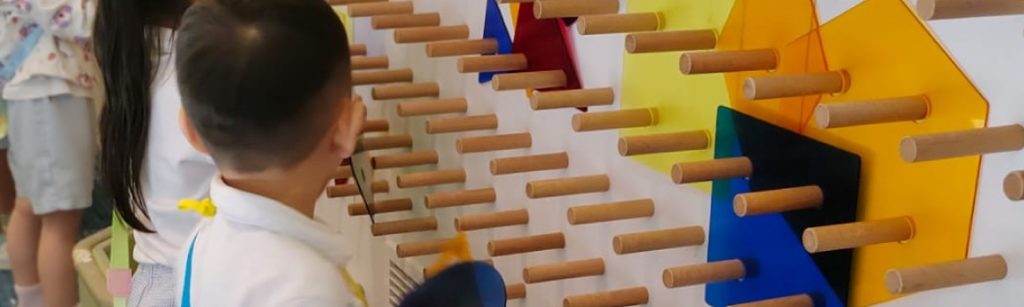
- We use colourful visual aids and tactile learning tools to help children physically grasp and manipulate abstract math concepts.
- Our teachers facilitate group activities that specifically encourage collaborative problem-solving, logical reasoning, and clear peer communication.
- Our approach focuses on building true conceptual understanding and self-confidence instead of rote memorisation by itself.
By combining fun with academic exercises, we support numerical learning in meaningful and memorable ways. This helps prepare your child for a smooth transition into Primary 1.
Support Your Child’s Early Numeracy
Early numeracy is about building thinking skills and confidence, not rushing academics or focusing only on number familiarity and confidence. Everyday experiences provide countless opportunities for its development!
With consistent exposure and structured exploration, children can develop strong foundations for all types of learning. To learn more about how we support that at My Little Campus, reach out now to book a school tour with us!