
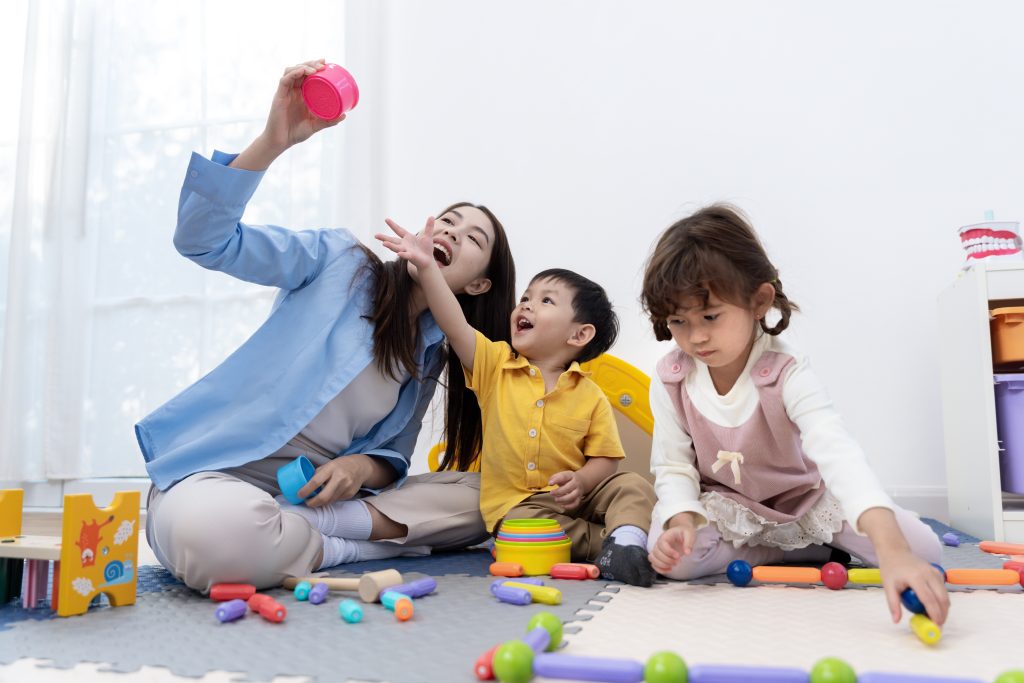
At the start, many parents may observe their child gripping a crayon awkwardly, pressing too hard, or tiring quickly. Some children prefer stacking blocks to sitting down to draw. This is quite common and doesn’t necessarily indicate a problem.
Small everyday movements are necessary to build the hand strength your child needs later for writing. This includes gripping a crayon, using safety scissors, and rolling playdough. These movements matter long before your child starts formal writing.
This guide looks at how fine motor skills develop at preschool in Singapore. It also covers what to look for if you are considering a preschool in Singapore, or simply want a few ways to support this at home.
Is It Normal If Your Child Still Doesn’t Hold a Pencil the ‘Right’ Way?
Yes, pencil grip develops gradually and unevenly from child to child, and many children continue refining it well into their Kindergarten years.
It is easy to compare your child’s grip to a cousin’s or classmate’s and worry that they are behind. However, it’s important to remember that hand strength develops at different rates for each child.
What matters more than a ‘correct’ grip at three or four is steady progress. This could be a less controlled grip, gradually becoming more stable and functional. It could be a little more control each month, or a little less tired after colouring for a while.
This is why opportunities for art and writing continue as children progress from Nursery into Kindergarten. Children get ongoing practice, not a single deadline to meet.
If a grip seems to cause your child pain or gets in the way of everyday tasks, mention this to their teacher or paediatrician. It is simply one more thing to keep an eye on together.
What Fine Motor Skills Is Your Child Building at Preschool in Singapore?
At this age, your child is building specific hand skills, such as grip strength and hand-eye coordination, through ordinary classroom moments rather than any one fixed activity.
While these skills may seem like ordinary play, they are actually performing crucial developmental work. Below are the main skills your child is building, and why each one matters.
- Grip strength: the strength and endurance needed to hold and control a pencil or crayon during activities. This develops through squeezing, pressing, and pinching motions.
- Bilateral coordination: using both hands together, with one hand holding steady while the other works. This is needed for cutting, buttoning, and later, writing.
- Pincer grip: the thumb-and-finger hold used to pick up small objects. Developing this type of finger control supports later pencil manipulation.
- Hand-eye coordination: matching what the hand does to what the eyes see. This helps your child stay inside a line or aim at a target.
- Wrist stability: keeping the wrist steady while the fingers move. This supports controlled pencil strokes later on.
Your child does not build these skills through one single activity. They build gradually, through ordinary moments in the classroom and at home, day after day.
How Do You Know If a Preschool Is Giving Your Child Enough Hands-On Practice?
Look for a preschool where activities like art, cutting, and moulding are incorporated regularly into the classroom routine, not just occasionally, and ask how teachers guide children through them.
A short visit can tell you a lot. Notice whether art materials are part of daily play rather than just kept for special occasions.
Ask teachers how they support children who are still learning these skills. This matters more than whether a child finishes a task quickly.
At My Little Campus, our Nursery classes are guided by teachers who help children build fine motor skills through activities such as handwriting, alongside their broader language and Mandarin learning. This carries through across our centres, including our preschool in Pasir Ris, Bedok Reservoir, Sembawang, and Yishun centres.
If you are comparing a few preschools in Singapore, ask each one the same questions. This makes it easier to compare fairly.
It also helps to notice how a classroom displays children’s own drawings and artwork. This can give you a sense of how children’s creative work is incorporated into the learning environment.
Ready to See Fine Motor Skills in Action?
Fine motor skills typically do not manifest as a single milestone. They build quietly, through ordinary moments with crayons, scissors, and playdough, day after day. If you would like to see this in practice, visit our preschool in Pasir Ris, or one of our other centres.
Book a school tour with My Little Campus to find out more.