Hands-On Science in Singapore Preschools: What Parents Should Know

Preschools across Singapore often describe their approach as “hands-on” or “play-based,” but those terms can mean different things in practice. A website can provide an overview, but it may not fully reflect everyday classroom routines. This article explains what hands-on science looks like for preschoolers, why it supports early learning, and what parents should look for when comparing preschools in Singapore. 

What Does Hands-On Science Look Like For Preschoolers?

In preschool, hands-on science usually means simple, sensory activities that let children observe change, ask questions, and explore using everyday materials. The emphasis is on seeing and doing rather than on abstract explanations. Activities are designed to be repeatable and appropriate to a child’s attention span and developmental stage.

What Kinds of Science Activities Might Children Try?

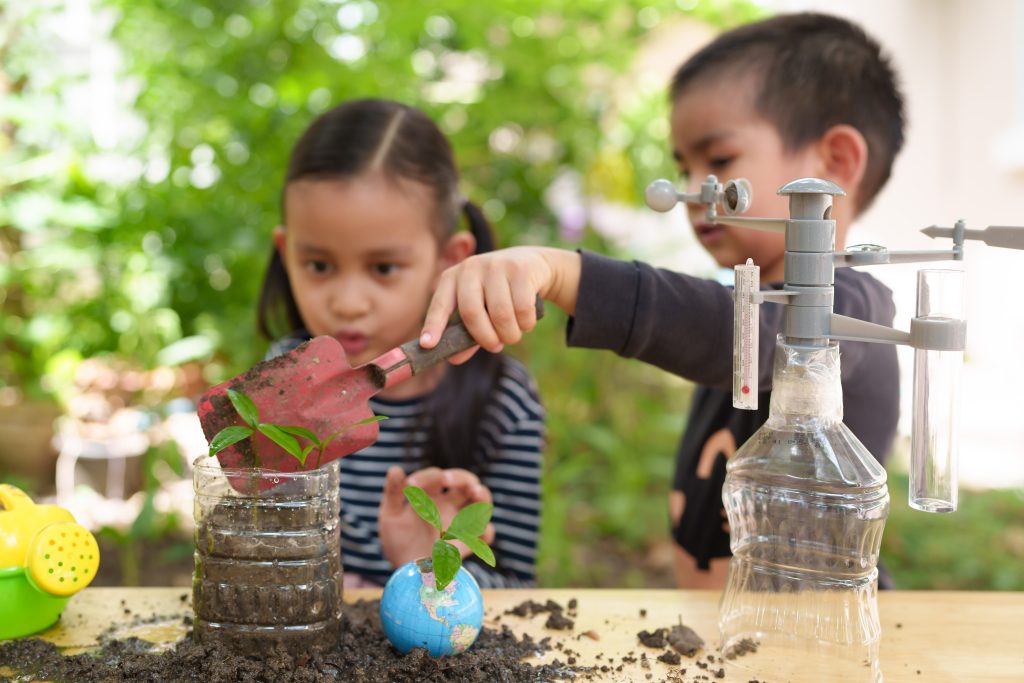
At the Kindergarten 1 (K1) stage, hands-on science activities are typically simple, observable, and tied to everyday materials rather than abstract concepts. For example, My Little Campus’s K1 programme includes activities such as planting seeds and observing their growth, as well as using coloured water to show how flowers take up water through their stems. These activities use familiar materials and don’t need specialist equipment or prior knowledge. 

What matters most is how activities are handled: children need time and repetition to notice change, and teachers who respond to their questions with prompts that extend observation and thinking. A seed won’t sprout in a single afternoon, and a flower may not change colour instantly, so activities like these should be revisited over several days or weeks rather than completed in one sitting. That slower rhythm is part of what distinguishes this kind of learning from a one-off classroom demonstration: children get repeated chances to check, compare, and notice small changes over time, rather than seeing a single result and moving straight to the next topic.


Why Hands-On Science Matters for Young Children 

How Does This Kind of Learning Support Curiosity and Confidence?

Watching something change slowly, such as a seed developing into a seedling, gives children opportunities to practise patience and observation in ways that may be harder to experience through a worksheet or verbal explanation alone. For young children, concrete, sensory experiences can make ideas easier to explore, particularly when they can handle materials and observe changes directly rather than only hearing about them.  

This type of learning can also give children opportunities to practise independence and observation skills. When a child plants a seed and checks on it over time, they practise following a simple process and noticing differences. While this doesn’t guarantee specific academic outcomes, it provides a repeatable, low‑stress way to practise noticing details, asking questions, and making simple predictions. 

This approach can also complement a preschool’s broader curriculum rather than existing as an isolated activity. Observing a plant’s growth can prompt counting (how many leaves today), descriptive language (the stem is taller, the leaf is a darker green), and conversation with a teacher or classmate about what might happen next. Hands‑on science supports language and early numeracy without needing to be framed as a formal lesson.

What Should Parents Look for When Comparing Preschools?

What Questions Can Parents Ask About a Preschool’s Approach to Hands-On Learning?

Because “hands‑on” and “play‑based” are common labels, direct questions and an in‑person visit usually tell you more than a website description. Useful things to check include:


  • How often do hands‑on science activities happen for my child’s age group?
  • What does a hands‑on activity look like — who prepares it, how long do children spend on it, and is it revisited?
  • Where do activities take place — at classroom tables, in outdoor areas, or in a dedicated space?
  • Are materials or results from recent activities visible in the classroom (growing plants, projects, photos, or observation notes)?
  • How do teachers respond when children ask questions during an activity — do they encourage prediction and exploration or move quickly to give answers?


Programme overviews that list concrete examples of activities make it easier to compare centres. For instance, My Little Campus’s programme overview provides specific examples of learning activities rather than describing its approach only in general terms, giving parents concrete points to consider when comparing preschool programmes. 

An in-person visit can also help parents understand how the published curriculum translates into the day-to-day classroom experience. My Little Campus’s overall approach to early learning is outlined on its website. Families can also visit any of its four centres in Bedok Reservoir, Pasir Ris, Sembawang, and Yishun to learn more about the programme, see the learning environment, and ask how hands-on learning is incorporated into the preschool day. 


Developing Fine Motor Skills Through Creative Art and Writing at Preschool in Singapore

At the start, many parents may observe their child gripping a crayon awkwardly, pressing too hard, or tiring quickly. Some children prefer stacking blocks to sitting down to draw. This is quite common and doesn’t necessarily indicate a problem.

Small everyday movements are necessary to build the hand strength your child needs later for writing. This includes gripping a crayon, using safety scissors, and rolling playdough. These movements matter long before your child starts formal writing.

This guide looks at how fine motor skills develop at preschool in Singapore. It also covers what to look for if you are considering a preschool in Singapore, or simply want a few ways to support this at home.

Is It Normal If Your Child Still Doesn’t Hold a Pencil the ‘Right’ Way?

Yes, pencil grip develops gradually and unevenly from child to child, and many children continue refining it well into their Kindergarten years.

It is easy to compare your child’s grip to a cousin’s or classmate’s and worry that they are behind. However, it’s important to remember that hand strength develops at different rates for each child.

What matters more than a ‘correct’ grip at three or four is steady progress. This could be a less controlled grip, gradually becoming more stable and functional. It could be a little more control each month, or a little less tired after colouring for a while.

This is why opportunities for art and writing continue as children progress from Nursery into Kindergarten. Children get ongoing practice, not a single deadline to meet.

If a grip seems to cause your child pain or gets in the way of everyday tasks, mention this to their teacher or paediatrician. It is simply one more thing to keep an eye on together.

What Fine Motor Skills Is Your Child Building at Preschool in Singapore?

At this age, your child is building specific hand skills, such as grip strength and hand-eye coordination, through ordinary classroom moments rather than any one fixed activity.

While these skills may seem like ordinary play, they are actually performing crucial developmental work. Below are the main skills your child is building, and why each one matters.

  •       Grip strength: the strength and endurance needed to hold and control a pencil or crayon during activities. This develops through squeezing, pressing, and pinching motions. 
  •       Bilateral coordination: using both hands together, with one hand holding steady while the other works. This is needed for cutting, buttoning, and later, writing.
  •       Pincer grip: the thumb-and-finger hold used to pick up small objects. Developing this type of finger control supports later pencil manipulation. 
  •       Hand-eye coordination: matching what the hand does to what the eyes see. This helps your child stay inside a line or aim at a target.
  •       Wrist stability: keeping the wrist steady while the fingers move. This supports controlled pencil strokes later on.


Your child does not build these skills through one single activity. They build gradually, through ordinary moments in the classroom and at home, day after day.


How Do You Know If a Preschool Is Giving Your Child Enough Hands-On Practice?

Look for a preschool where activities like art, cutting, and moulding are incorporated regularly into the classroom routine, not just occasionally, and ask how teachers guide children through them.

A short visit can tell you a lot. Notice whether art materials are part of daily play rather than just kept for special occasions.

Ask teachers how they support children who are still learning these skills. This matters more than whether a child finishes a task quickly.

At My Little Campus, our Nursery classes are guided by teachers who help children build fine motor skills through activities such as handwriting, alongside their broader language and Mandarin learning. This carries through across our centres, including our preschool in Pasir Ris, Bedok Reservoir, Sembawang, and Yishun centres.

If you are comparing a few preschools in Singapore, ask each one the same questions. This makes it easier to compare fairly.

It also helps to notice how a classroom displays children’s own drawings and artwork. This can give you a sense of how children’s creative work is incorporated into the learning environment. 

Ready to See Fine Motor Skills in Action?

Fine motor skills typically do not manifest as a single milestone. They build quietly, through ordinary moments with crayons, scissors, and playdough, day after day. If you would like to see this in practice, visit our preschool in Pasir Ris, or one of our other centres.

Book a school tour with My Little Campus to find out more.


Building Math Confidence at Preschool in Singapore

A child avoiding math at this age isn’t necessarily a reflection of their ability; it can also be about confidence. A child who seems hesitant with math may benefit from more small, low-pressure opportunities to explore numbers and build confidence. Whether you’re choosing a preschool in Singapore for the first time or wondering what’s missing at your child’s current one, the good news is that confidence can be built, both at home and in the right classroom. Here’s what that actually looks like.

How Can a Preschool Help Build a Child’s Confidence in Math?

Confidence in math can be built through small, frequent wins with real objects and everyday language, rather than relying solely on worksheets or repetitive practice.  Children can begin exploring ideas about quantity, size, and patterns through ordinary play. A play-based preschool can build on these experiences, turning everyday moments into low-pressure opportunities to practise. Here’s what that can look like.

What Everyday Activities Build Number Sense?

Simple, everyday moments can give children valuable opportunities to develop number sense. Counting steps on the way up the stairs, spotting numbers on lift buttons, or counting down while waiting for the bus are all everyday moments that build this skill. These are the kinds of small routines families can explore at home and through learning experiences in our preschools across Singapore. These moments work because they use real objects your child already understands, rather than abstract symbols on a page. You don’t need special training or materials — the ordinary parts of your day are already full of opportunities.

How Does Play-Based Learning Support Early Math Skills?

Play does more than keep children entertained. Building with blocks, completing puzzles, and playing sorting games can give children opportunities to explore patterns, make comparisons, and engage in early problem-solving. At My Little Campus’s preschools in Pasir Ris, Yishun, Bedok Reservoir, and Sembawang, our hands-on curriculum uses visual aids and physical materials through play-based learning to help children build these foundations naturally, as part of a broader focus on Mathematics, Science, English, and Mandarin.

Why Does Praising Effort Matter More Than Getting the Right Answer?

Praising effort matters more than getting the right answer because it helps children see mistakes as part of learning and encourages them to keep trying when math feels challenging. Instead of focusing only on whether your child gets the right answer, praise their effort and willingness to try. If your child is counting to ten but gets a number out of order, try praising them for trying rather than only celebrating a perfect count. Over time, this kind of encouragement can help children feel more comfortable trying something they’re unsure about, building their confidence. 

What Should You Look for in a Preschool That Builds Early Math Skills?

With so many preschools in Singapore to choose from, it helps to look past labels like “the best” and focus on what you can actually observe for yourself. What matters more is finding the best fit for your child, and that usually comes down to a few observable things: how teachers respond when a child gets something wrong, how much hands-on math material — such as counters, blocks, or number lines — is actually visible in the classroom, and whether the daily routine includes opportunities for play alongside more guided activities. These are things you can see for yourself, rather than take on faith from a brochure.

How Do You Know If a Preschool’s Curriculum Is Right for Your Child?

A curriculum can look impressive in writing and still feel very different once you’re standing in the classroom. Rather than relying on a prospectus, ask to see a sample daily schedule and pay attention to how academic activities and play are balanced throughout the day. It’s something we’re happy to walk parents through at any of our preschool locations. A visit lets you see these details for yourself, making it easier to decide whether the preschool feels like the right fit for your child. 

What Should You Ask During a Preschool Tour?

A few specific questions can tell you more than a general tour ever will. Try asking how teachers respond when a child gets an answer wrong, how often hands-on materials like blocks or counters are used in a typical day, and what a normal math-related activity actually looks like for your child’s age group. If you’re near Bedok Reservoir, Pasir Ris, Sembawang, or Yishun, book a tour to ask us these questions in person.

What Does Everyday Math Confidence Actually Look Like at Our Preschool?

At My Little Campus, confidence looks less like getting every answer right and more like a child willing to try. It’s a child attempting to count their own snacks without being asked twice, noticing on their own that the red blocks and blue blocks make a pattern, or saying “I can try” instead of “I can’t” when something feels new. These small shifts build gradually, through repeated, low-pressure moments rather than any single lesson, which is exactly why the everyday environment around your child matters so much.

Ready to See This in Action?

If your child has been avoiding numbers or saying they’re ‘not good at math,’ remember that this doesn’t necessarily reflect their ability or mean they’ll always feel this way. At My Little Campus, we build math confidence across all four of our centres through everyday play, encouragement, and plenty of hands-on practice.  Find a centre near you to see this approach for yourself and meet the team who’ll be working with your child.