November 11, 2025
6 Practical Ways to Build Your Child’s Social Skills

Social skills are as important as academic learning. Many of us realise this now, especially given the role they play in adulthood or careers.
This is why building social skills in your child’s early years matters. These skills form a crucial part of your child’s foundation for future success.
It’s possible to start to improve your child’s social skills as early as the preschool period. This is when children begin to communicate, cooperate, and build relationships with others.
As such, it may even be the perfect time to begin honing those skills for your learner. Fortunately, there are many ways to do this as parents. If your child is a little shy or struggles with self-expression at this stage, our strategies here offer ideas that may help.
Why Social Skills Matter in Early Childhood
It’s important to learn how to develop social skills in a child because it sets the stage for his or her development of essential life competencies. These include the following:
- Teamwork
- Empathy
- Problem-solving
- Leadership
All of these can build resilience and independence for your little one, particularly as your child transitions into formal schooling or group learning settings.
The ability to socialise and communicate is also vital in letting children express themselves clearly. By strengthening communication skills early on, you can even help reduce children’s frustration and possibly tantrums.
Singapore’s own Ministry of Education (MOE) emphasises this through its Nurturing Early Learners (NEL) Framework. This sees Social and Emotional Learning (SEL) as a core piece of the holistic development puzzle.
With SEL come competencies like self-awareness, social awareness, and relationship management. All of them tie into a child’s personal well-being, happiness, and academic performance.
This is why early childhood centres like My Little Campus integrate social learning into daily routines. From play to group activities, we consider it part of the goal and an educational priority.

Common Challenges Parents Notice
You might worry that some behaviours are getting in the way of your child’s social development. Here are some examples:
- Shyness about joining group activities
- Difficulty sharing toys
- Reluctance to take turns
- Reluctance to introduce themselves
- Hesitation in answering questions from strangers
- Preference for engaging in solo over group play
These are typical developmental hurdles for most children. Fortunately, intentional and consistent support can often address them over time.
Practical Ways to Build Your Child’s Social Skills
Nurturing social skills doesn’t require a special curriculum. It can be woven into daily life through modelling strategies and the creation of opportunities for interaction.

1. Model Positive Social Behaviour
Children learn a lot by watching and imitating adults. This is why modelling the social behaviour you want can be hugely effective in developing your child’s basic social skills.
Greet neighbours cheerfully, say thank you to cashiers, or apologise when you make a mistake. Each of these can serve as a positive lesson to your child in socialisation.
2. Encourage Playdates and Group Play
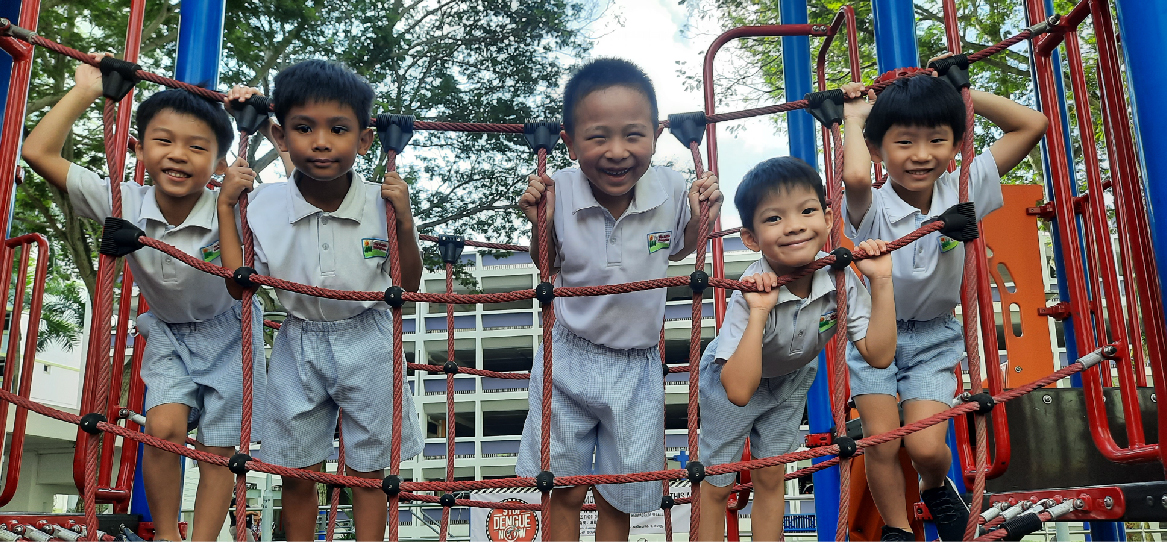
Provide opportunities for your child to practise social interaction in supervised settings. For example, invite classmates or cousins over for short and manageable play dates.
You can offer him or her structured play activities like simple board games or building with blocks. Make sure they’re basic and cooperative tasks, so that your child can grow more confident in dealing with groups.
3. Roleplay Real-Life Scenarios
Roleplay is a great way to help your child prepare mentally for actual social scenarios. It allows him or her to rehearse the skills they need for those settings.
Try roleplaying scenarios like ordering food from a hawker centre or introductions to new people. You can even roleplay scenarios like borrowing toys from other children.
This allows your child to build confidence about what he or she can do in such situations and lets him or her test out language in advance.

4. Teach Emotional Vocabulary
Strong social skills are linked to emotional intelligence, which begins with the ability to name one’s feelings. Teach your child to label emotions by naming him or her in your observations.
For example, say, “You seem to feel sad because your block tower fell.” Or you can observe that your child seems to feel happy because of your impending trip to a toy store.
This can improve your child’s communication skills while also giving him or her a voice for feelings, allowing your child a measure of control over them and their expression. The best part is that this can even reduce behavioural outbursts!
5. Praise and Reinforce Positive Social Interaction
Acknowledge and celebrate small wins. It’s hugely motivating for little ones and can be a good way to encourage them when they demonstrate positive behaviour.
Just remember to be specific about what you’re praising, e.g. if it’s their patience in waiting to get a turn to use a toy, say that. Be sincere and make your child feel seen.
6. Use Books and Stories for Illustration
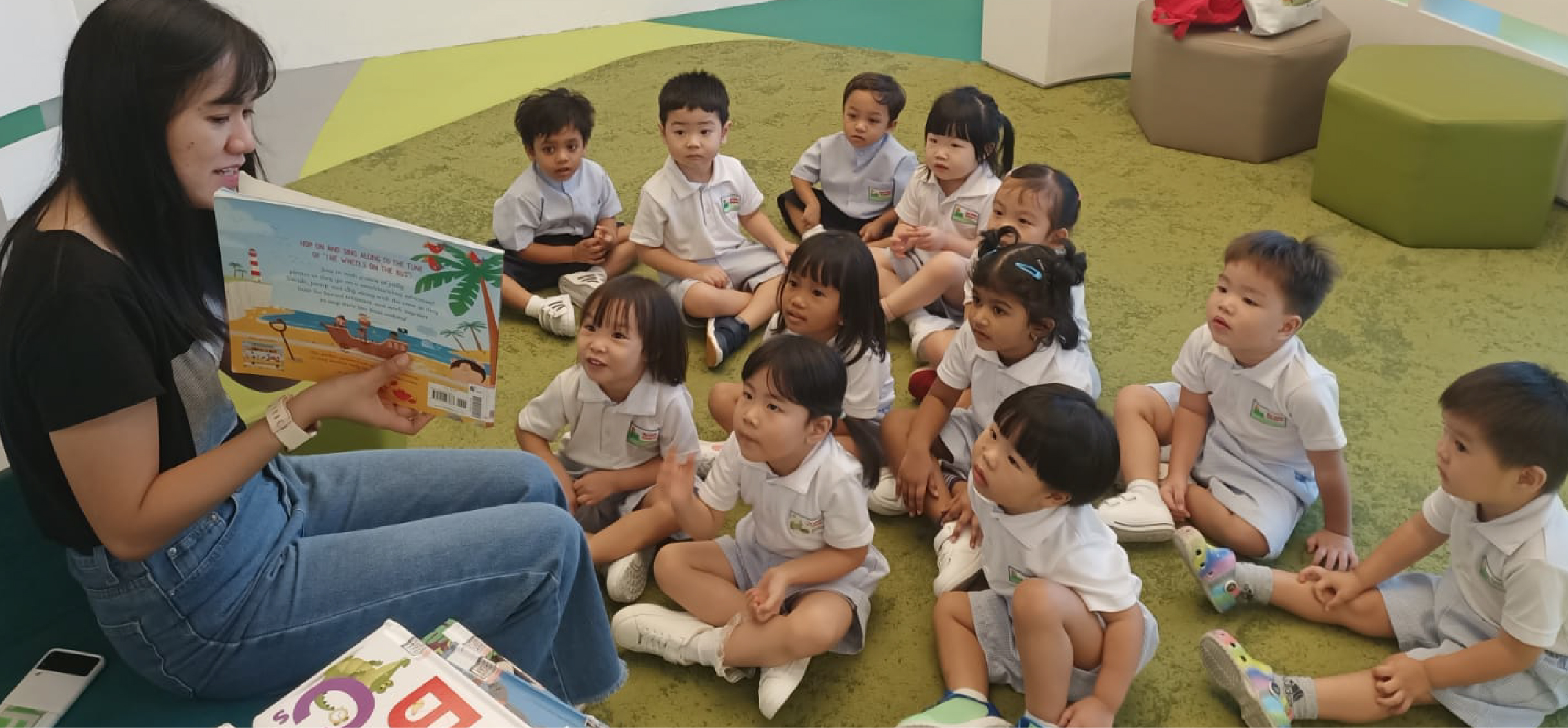
Reading stories together can also give you chances to discuss complex social concepts. It even lets your child see fictional examples of empathy, friendship, collaboration and more.
Don’t be afraid to pause the story to ask questions that may help. For example, ask what they think the character feels or if they think the character should work with others.

Strengthening Social Skills Through Everyday Communication
Communication and social skills go hand in hand because communication is how connection is forged with others.
For how to improve communication skills in a child (which supports their social competence in turn), try these techniques:
- Sing songs and rhymes together to build rhythm, pronunciation, and memory.
- Actively encourage open-ended questions instead of yes-or-no ones.
- Limit screen time, which typically involves passive consumption.
At MLC, our teachers are trained to nurture social and communication skills using these techniques. Our daily circle time discussions, “Show and Tell” sessions, and guided group projects give children multiple opportunities for expression.
Choose a Preschool That Supports Social Development
From playdates to role play, parents have countless ways to improve children’s social skills at home. It just takes patience and practice, but children can easily gain the confidence and communication skills they need to thrive.
MLC nurtures both academic excellence and social confidence in a preschool setting, encouraging children with gentle but consistent support. Contact us today to see how, whether by exploring our programmes or booking a school tour.