
upcoming events
-

June 10, 2024
4 Ways to Raise a Bilingual Child
Bilingualism is an invaluable skill that offers a wide range of benefits. From enhancing cognitive abilities to expanding communication avenues and professional opportunities, the advantages of being bilingual are substantial.
In Singapore, children are expected to learn their Mother Tongue from Primary 1 onwards. This early introduction to a second language is designed to harness the many advantages of bilingualism from a young age. The ability to communicate in multiple languages can significantly enrich a child’s life and future prospects.
At My Little Campus, we recognise the importance of laying a strong foundation for bilingualism early on, which is why we offer a bilingual preschool curriculum. However, if your child’s current preschool doesn’t provide this, there are still effective ways to cultivate bilingualism.
Today, we’ll share some practical tips to help you build a solid foundation for your child’s bilingualism, ensuring he/she not only excels in Mother Tongue but also develops a genuine interest in it for future success.

1. Expose the child to the second language early
A fair bit of research suggests that it’s better for children to learn languages at preschool. Some even recommend starting before age 3!
The idea is to introduce your child to the second language while he/she is at the best age for absorbing new information. To do that, try working the second language into daily routines and dialogues.
Start referring to things your child interacts with daily in the second language, for example. You can even try having conversations with him/her in that second language and teach him/her the responses at first.
Eventually, you should find your child no longer needing prompting to use the language. At some point, he/she may even be first to initiate it!

2. Build a language-rich environment
Once you’ve already introduced your child to the second language, you want to make it a constantly accessible thing to him/her. It shouldn’t be something restricted to just one specific time of day or class. Rather, it should become a natural part of his/her world.
This makes learning the language less of a slog or challenge. To that end, put together an immersive learning environment that supports its pickup.
For example, try putting labels on items that give them the names in both languages you use at home. Buy and read Mandarin books to him/her, and discuss them with him/her afterwards. Or incorporate the second language into hobbies like songs and games!
This builds a bilingual foundation steadily while also doing it in a fun or inoffensive way. We ourselves do this in our bilingual preschool in Singapore through things like Chinese Speech and Drama and Chinese Abacus classes (that also strengthen arithmetic!).

3. Engage with the culture
You can’t separate a language from its culture. In fact, when it comes to language learning, it’s much better to embrace the latter as a way of contextualising the language itself!
Try doing this with your child by recognising or celebrating Chinese events with him/her. You can take part in popular Chinese festivals, for example, or try the food associated with the culture. You can even go on trips to areas where it’s widely spoken, like making a morning breakfast run to Chinatown.
It’s a great way to get immersive and practical in language learning. Your kid can expand his/her vocabulary and understanding of the language while having fun.

4. Get help from experts
Thus far, we’ve been talking about tips for bilingual-skill-building that rely on parental guidance. But what do you do if the second language you’re trying to teach isn’t your strong point either?
When that happens, you can turn to the pros. Look for early-education professionals who have experience with bilingual education, like ours.
For instance, our own curriculum is explicitly designed to promote bilingualism in preparation for primary school. That’s why we’ve come up with programmes specifically for preschoolers that can help them acquire Mandarin more easily.
We reinforce Mandarin skill development with programmes in Han Yu Pin Yin and Chinese character writing. We also have sessions to cover listening, comprehension, and recitals.
And through all of that, we work in fun elements like the drama sessions and plays we mentioned before. This keeps children from tiring of the language and gives them added incentive to pay attention.
Bilingualism starts slow but goes steady when you start early
In many cases, it takes sustained exposure and immersion to get a child to develop bilingualism. That’s why you need to stay the course once you’ve started with the tips above.
If you find them a little hard to achieve by yourself, though, don’t despair. As we mentioned earlier, our own preschool teachers can help.
At My Little Campus, our teachers have been trained to foster comprehensive development as well as continuous language-skill growth in our little ones. Our long-running focus on bilingual skill development has also been proven effective time and again.
If you want to learn more about our bilingual-learning expertise and the programmes we offer, please enquire. We’ll be happy to explain how we can help your child acquire a second language while seeing to his/her overall growth at the same time.
-

May 14, 2024
5 Tips To Build Resilience in Children
Navigating the journey of growth can be both enchanting and daunting for our children. From tentative first steps to embracing new emotions, every milestone is a testament to resilience and growth.
Many of our staff in My Little Campus are parents too. Believe us when we say we understand the worry that probably makes you feel. As parents, most of us would give nearly anything to keep hardship from our little ones!
Alas, that’s impossible. However, it’s perfectly possible to prepare our little ones to face problems.
Indeed, as early as preschool, one can hone a child’s ability to deal with and even thrive in the face of adversity. This means building resilience in children, endowing them early on with a trait that will serve them well for the rest of their lives.
How can one do this, you ask? Today, we’ll go over the techniques our educators at My Little Campus practise.

1. Raise them to have a growth mindset
The growth mindset is an attitude that’s always focused on improvement. It believes talents and abilities aren’t determined at birth. Rather, they’re honed and even acquired.
In our childcare in Singapore, it’s long been one of the pillars of our child development approach. This is because it often leads to more resilient children who view even hurdles as opportunities for development.
We’ve already seen this in the studies of Dr Carol Dweck, where she investigated the differences between children who rebound after setbacks and those who don’t. Ultimately, her research suggested that praising persistence and effort (growth mindset) led to better results than praising intelligence (fixed mindset).
You can apply similar principles with your preschooler. Praise his/her perseverance because that tells him/her it has value and can lead to eventual triumph. If you praise his/her intelligence instead, it seems like he/she has already plateaued and doesn’t need to try to “get smarter”.

2. Encourage them to adopt positive coping mechanisms
One of the best ways of building resilience in children is to show them that how they react to a setback matters in how they feel.
If they dwell on it and beat themselves up, they only feel worse. But if they approach it as a lesson on what doesn’t work instead and as a fresh opportunity to learn, they can feel better faster.
This means teaching children to accept failure. Help them see it as a temporary stop, not the end of the road. Show them that it can even be a chance to grow!
You can also teach children to accept uncertainty and change this way. Take the first day of preschool, for instance: many children end up anxious or even crying about this big change to their routines.
But as we said before in our guide to preparing for it, this doesn’t need to be the case. You can even get them excited about it by framing the change as a chance for new adventures and excitement!

3. Provide a supportive environment
Parental and peer support has been shown critical in reducing stress symptoms among children and adolescents facing problems. That’s why we spend so much time creating supportive, engaging environments for all of the children in our care at My Little Campus.
To do the same, try to create an empathetic, nonjudgemental space for your child. Make it clear from the get-go that he/she can always share things with you – even when it’s something that you might disapprove of.
If your child knows that you’re always ready to acknowledge his/her emotions, you create a “fallback” position in his/her mind. This and you will give him/her the sense that even in the bleakest of times, there’s always a sanctuary to turn to when he/she needs respite.

4. Help them put things in perspective
A lot of children tend to find the long-term too abstract to consider, so the disasters of the present feel like forever to them.
You can help by encouraging your child to think about what’s beyond “the now”. Remind him/her about past problems or pains that didn’t last forever or that he/she overcame.
Talk about how your child might have been worried about meeting new people at preschool, for instance, but now has friends whom he/she met there. Or about how he/she used to find writing his/her own name difficult but can do it handily now.
Remind children of their accomplishments at times of trouble. This can help them find the strength to keep going, in search of better moments.

5. Sustain a positive view of themselves
Something that can severely hamper a child’s ability to recover from a setback is a negative opinion of the self. That’s why it’s important to ensure that your child maintains his/her self-confidence and opinion of himself/herself in adversity.
There are several ways to do this, including reminding your child that no one is defined by his/her failures. Remind your child too that he/she has overcome challenges before, and has abilities and accomplishments worth celebrating.
The idea is to affirm your child’s self-worth and positive self-image. You want to prevent your child from feeling like whatever he/she is facing is overwhelming by reminding him/her that he/she has the power and ability to forge on!
Let us help you build your child’s resilience
While it may be tempting to put off some of the steps we outlined for a later age, it’s actually best to start as soon as possible. That’s because resilience is something that children build on over the years.
What’s more, what works for one child doesn’t always work for another. Even at My Little Campus, we’ve found it necessary to tailor our approaches according to each child’s personality and preferences – so you too may have to be flexible in how you approach this.
If you want more help with building your child’s resilience, reach out to us. You can enrol your child in our preschool programmes, where our approach to holistic development strengthens children’s resilience.
To learn more about how we do it, contact us today. You can even enquire about which My Little Campus programmes would best serve your child!
-

April 16, 2024
The Checklist: What every child needs in preparation for Primary 1
Is your child about to enter primary school? Congratulations, that’s quite a milestone!
As with all milestones, you’re probably feeling some nerves about it, though – and that’s all right. The first step into formal education is a big one for your child. You would be remiss not to have some worries about it!
Fortunately, preparing for Primary 1 or P1 isn’t that difficult. To prove it, we’ll show you how to prepare your child for Primary 1 using a checklist prepared by our own early childhood educators at My Little Campus.

1. The fundamentals of literacy and numeracy
In Primary 1, children will start taking on specific subjects like English, Maths, and Chinese or Mother Tongue. To do that, they need a good base from which to work – one that’s founded on their ability to read, write, and do numbers.
That’s why our academically based curriculum at My Little Campus is so effective at preparing children for Primary 1, in fact. We lay solid foundations for children’s literacy and numeracy so they can move on to P1 with confidence.

2. The ability to focus
The primary classroom setting is different from the preschool one. In most cases, student-teacher ratios will be much higher, which means teachers will be able to provide less individualised attention.
As such, your child needs the ability to understand and follow instructions independently, as teachers will do less hand-holding at this stage. With longer classes, your child will also need to sustain his focus for longer periods of time than before.
A good way to build this ability at home is to give your child small tasks with detailed instructions. Give him/her a puzzle toy to solve, perhaps, or a simple chore like organising his toys. Start off by guiding him/her through each task until he/she follows through, then start letting him/her complete the tasks on his/her own over time.
This trains children to work independently as well as keep their attention on a task until it’s done, which will serve them well in Primary 1.

3. Training and readiness for new routines
Your child will have a lot of new routines in primary school. From packing his/her own belongings to buying his/her own food, this represents a lot of changes – and children don’t always do well with those.
There are ways to prepare your child, though. First, try to get him/her mentally ready for it. Talk to him/her about what the school day will be like, to start familiarising him/her with what will happen.
Most schools will actually help by assigning a buddy to your child. However, some children may still feel overwhelmed and lost, so it’s best to prepare them for the new routines as much as possible.
You can even try simulating the routines at home. Let your child pack his/her own bags several weeks before the first day of P1, for example. You can also try letting him/her buy food at a food court the next time you go out to eat, which is similar to what he/she will do in school.

4. Social and emotional preparedness
You should also make sure that your child is socially and emotionally equipped for primary school. This change will bring new social opportunities as well as challenges.
To that end, try talking to your child early on about the possibilities. Explain that he/she will meet new people, make new friends, and even discover people who disagree with him/her on many things. Talk about how to handle each of these in a healthy way.
Above all, impress on him/her that you’ll always be there for support. Let him/her know that if he/she experiences big feelings due to the transition, you’ll be happy to listen or help him/her deal with those too.

5. The actual school paraphernalia
And of course, we can’t forget this. Your child needs gear!
Your primary school will usually help with this by giving you a book list and checklist of requirements. You can use those to guide your shopping, which should generally include these:
- Notebooks
- A pencil case with stationery such as pencils, eraser, ruler, etc
- A school bag
- A labeller (to make labelling your child’s items easier)
- A lunchbox for snacks
- Emergency contact cards with protective sleeves (for safety)
Take your child with you to shop for these items too! It’s a good way to get him/her excited about this next stage in his/her educational journey.
We can help you prepare your child for P1 early on
On the whole, holistic preparation is important for the transition to primary school. That means you shouldn’t just think about the material items but also your child’s emotional, psychological, and social readiness for what’s next.
If you want more help preparing your child for the change, it’s best to start as early as possible. Enrol your child in our programmes at My Little Campus and we can work on all of the fundamentals he/she needs early on – from his/her academic readiness to his/her independence.
Learn more about our curriculum and how we get children ready for their P1 journeys. Enquire about My Little Campus’s programmes today!
-

March 26, 2024
Find Joy in Learning Chinese: 5 Activities You Can Do With Your Child
Bilingualism has long been an advantage for Singaporeans, as it allows us to communicate with people from different corners of the globe. Unfortunately, learning bilingualism isn’t a smooth process for all of us. For some, it’s even a slog!
Fortunately, there are ways to make the acquisition of this skill as easy as it is enjoyable. Helping children love Chinese – the language where most of them struggle – can do a lot.
But how can you help your child love this language from an early age? That’s where we can help. Based on our experiences at our preschool in Singapore, we’ll share some of the best activities you can try with your child to help him/her enjoy the language from the start.
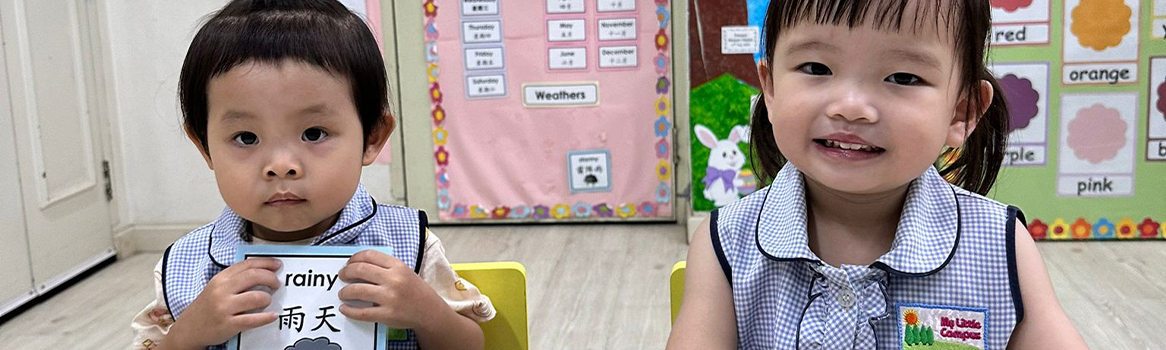
Indulge in storytelling in Chinese
Storytelling is a good way to learn any language. Plus, there are so many ways to do it.
You can start by reading aloud some Chinese books for preschoolers. From there, you can go into acting out the books together. You can even do simple storytelling of your day or history in Chinese!
This can be a marvellous way to turn language learning into a fun, experiential matter. It’s also a good way to introduce different phrases and new words to a child.
If you do decide to go with the classic book-reading route, by the way, make sure that you choose age-appropriate options for your child. This can also help you get started on teaching Chinese reading for children.
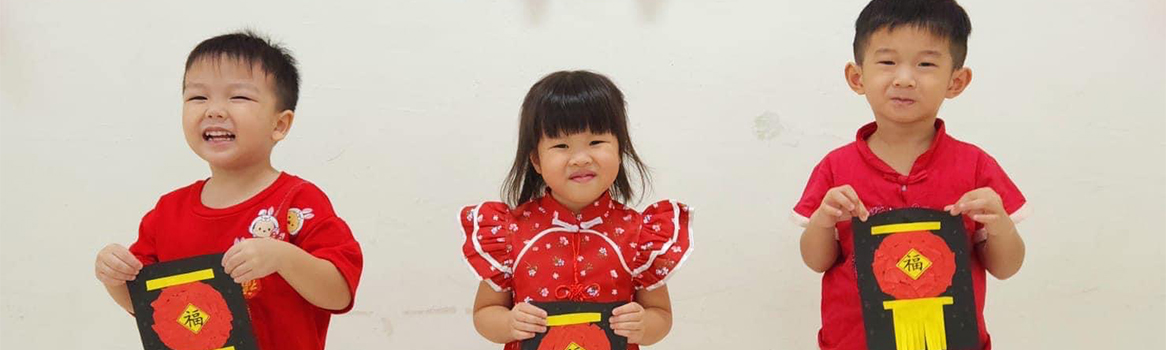
Explore the culture and heritage
Appreciating the culture attached to a language can be a good way to foster interest in that language. In particular, children often love learning about Chinese events and festivities associated with celebration.
Chinese New Year is a good example – and it even comes with a reward in the form of red packets! Try sharing with your child the traditions behind this festivity, as well as the reason it’s celebrated and how.
Other things you can try would be introducing your child to Chinese festivals, then teaching him/her festival-related vocabulary like the expressions for well-wishes and blessings. You can even try teaching him/her Chinese festival songs!
We do similar things at My Little Campus to build the children’s interest in Chinese culture and language. It encourages them to get involved and learn more about their heritage and culture at the same time.
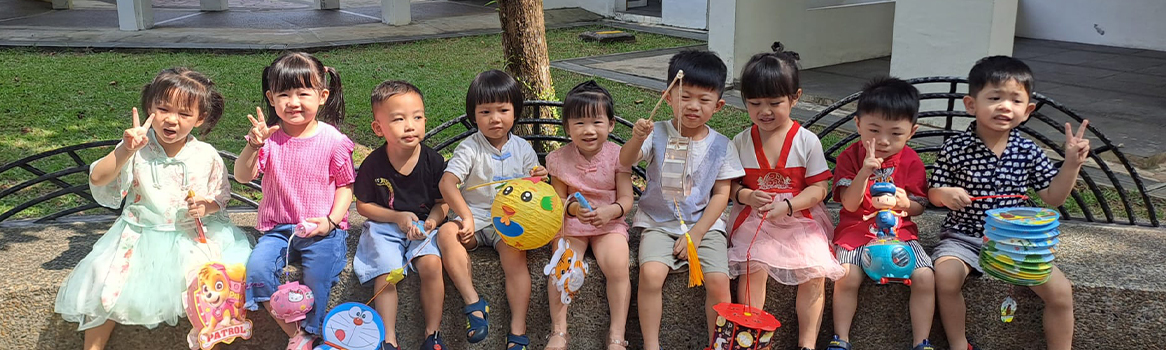
Try Chinese arts and crafts
Children often enjoy working with their hands, so why not make Chinese learning fun by incorporating this into your activities? Believe it or not, you can still teach a child Chinese this way!
The idea is to teach arts and crafts that tie into Chinese language and culture. Try lantern-making with coloured paper, bamboo sticks, and glue, for example.
From there, you can tell your child about where these lanterns are used and what they symbolise. This already gives you so many opportunities to introduce new Chinese terms to him/her – the words for “lantern”, for example, or “good fortune” (which is what the lanterns are often meant to symbolise).
Most lanterns even have Chinese script written on them – which brings us to the next activity you can try with your child, actually.

Teach your child Chinese calligraphy
Chinese calligraphy is an art worth learning early on, and one that can further deepen understanding and knowledge of the Chinese language. Fortunately, you don’t need much to get your child started with it.
All you need is some suitable paper, some Chinese calligraphy brushes, and some water-based (child-safe) paint. You can even try getting paint in colours your child likes!
From there, you can show your child how to do simple words first and have him/her copy what you write. This is a great way to get him/her started on understanding written Chinese as well as building his/her vocabulary.
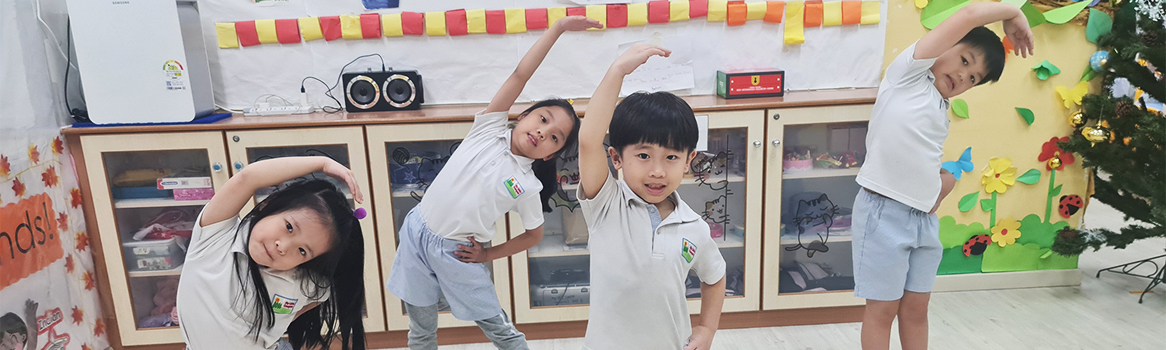
Discover Chinese music in song and dance
Children love song and dance, so why not incorporate some Chinese songs into your current playlist for your child? You can even have songs you sing together as part of your daily routine while doing chores like cleaning up.
Just make sure you choose Chinese songs and rhymes suitable for children. Remember that the topics of the songs themselves can teach your child new things, by the way. This video has a great song for teaching your child about tigers in Chinese, for instance.
We do this at MLC too by having dedicated parts of the day when we conduct activities and teach completely in Chinese. At those times, we often do storytelling or song and dance in Chinese.
Start building your child’s bilingualism as early as possible
The activities we shared above can build your child’s bilingualism early on by helping him/her to appreciate and even love the Chinese language.
We use the same techniques at My Little Campus to build children’s interest in it, and it contributes to the strength of the foundation we end up laying for Chinese and bilingual learning.
Want to learn more about how we prepare young minds for the challenges of primary school and beyond? Discover our curriculum by speaking with us today!
-
March 20, 2024
Engage and Explore: 6 Sensory Activities That Your Toddler Will Love

When we talk about sensory play, a good number of parents shy away instantly because they think of it as messy play. To be fair, it can be – sensory play often involves activities that have children splashing, squishing, and squelching any number of things!
But the virtues of this type of play can’t be overstated for toddlers. Remember, after all, that children discover the world through their senses. In fact, the earliest learning experiences are often sensory ones, as babies gather info about the world they’ve just entered through sight, sound, taste, scent, and touch.
Even in toddlerhood, this process of data collection continues. That’s why sensory play is good for supporting toddlers’ cognitive development. What’s more, it can support the development of many other things, like fine motor skills, observation, creativity, and the like.
And that’s all while letting the children have fun! So, it’s clear that sensory play has a place in toddler care and enrichment. But how does one begin with it?
To help you out there, we’ve put together a list of some amazing sensory activities toddlers love. These should help you stimulate your child’s growth in new ways he/she will enjoy!

1. DIY sensory bins
What it is: A big, safe bin or box where you’ve put together items that your child can discover and play with through touch – a binful of tactile experiences, if you will!
What you need: Whatever you have around the house that’s safe for your child to play with, e.g. water, powder, or even shaving cream that a child can squeeze and even mash.
What you can do: Ask your toddler to describe the textures in the bin based on what he/she can feel. Are they smooth? Soft? Round? Squishy?
You can also hide objects or toys in the bins for your child to find. Try challenging him/her to locate it using only his/her hands!
What the benefits are for your child: This is an exploration of the wonders of touch and can be an excellent way to show your child the amount of information our hands can collect. From the roughness of a surface to the apparent warmth or coolness of an object, there are myriad discoveries to make.

2. Finger painting
What it is: An artistic activity where your child flexes his/her creative skills.
What you need: Large sheets of paper and child-safe paint. Add plastic sheets to your table or floor if you want to protect him/her from the paint.
What you can do: Prompt the child to mix the colours using his/her finger to create new ones. You can also invite the child to copy the shapes you make or fill them in.
What the benefits are for your child: This is one of the activities for toddlers that’s perfect for supporting fine motor skill development. It’s also a great way to introduce colours, boost hand-eye coordination, and stimulate creativity.

3. Sensory storytime
What it is: The use of different media to add detail to book-reading or storytelling.
What you need: A sensory children’s book (there are a lot of these now). You can also use a regular children’s book and just supply the sensory items or experiences yourself.
What you can do: Ask your toddler to mimic the sounds or character voices in the book as he/she thinks they might sound. Another option is to ask him/her how the textures in the book feel.
What the benefits are for your child: This engages children on several levels – cognitively, through the storytelling, as well as experientially through the sensory input.
We do this at My Little Campus fairly often, using props like hand puppets and finger puppets to add new dimensions to storytelling. The best part is that the children get to participate in the storytelling too!

4. Sensory balloon play
What it is: Simple play using balloons
What you need: Balloons that you can fill with different things, like water, flour, or rice.
What you can do: Ask your child to describe the different textures he/she can feel when touching the balloons. Is flour squishy? Is rice bumpy? Do the different fillings sound different?
What the benefits are for your child: This is an example of activities for a toddler that develop gross motor skills. By tossing, catching, and squeezing the balloons, children sharpen coordination and muscular strength.

5. Play with child-safe clay
What it is: Moulding, rolling, squeezing, and squishing child-safe modelling clay or playdough.
What you need: Playdough (make sure it’s for kids and nontoxic)
What you can do: Show your child how to make compound shapes like basic animals using simpler shapes put together, then invite him/her to recreate those shapes.
What the benefits are for your child: This is another activity good for developing motor control. It’s also a good way to stimulate creativity in three dimensions.

6. Soap bubble activities
What it is: Play involving bubble wands, blowers, and the like.
What you need: Whatever bubble blower you can get your hands on. Just make sure the soap-and-water mixture is child-safe and unlikely to sting children’s eyes.
What you can do: Prompt your child to chase after the bubbles or pop them as he/she comes out. You can even add a new layer of learning to it by getting him/her started on numeracy through counting bubbles!
What the benefits are for your child: Toddlers love bubbles, so this is a fine way to work on your child’s overall physical fitness in a way he’ll/she’ll enjoy! You can help build better muscle tone as he/she chases and reaches for bubbles, boosting gross motor skill development.
Discover a playgroup programme that provides such activities daily
The activities above should get you started on supporting your child’s growth through sensory play. If you want to go further, though, consider enrolling your child in a preschool where it’s provided for from the outset.
For example, My Little Campus provides sensory play activities for toddlers’ daily schedules. In our care, they discover new worlds of engagement and exploration every day!
If you’re interested, you can learn more about our playgroup programmes for toddlers 18 months and up to better provide for children’s holistic development. Enquire about our programmes today.
-

January 2, 2024
5 Nutritious Foods to Boost Your Child’s Immunity

If you have a child aged 1 to 6 years old, you probably understand why nutrition is important for them. At this stage, they’re growing by leaps and bounds, but all of that growth requires fuel – and the best fuel for it is nutritious food.
Only with healthy food can child development occur properly. Growth is a process that sees the body consuming a great many vitamins and nutrients, after all. This means a shortage of one of vitamins and nutrients can actively hamper your child’s development.
Today, we’ll help you ensure healthy nutrition for children in your home by going over the key food groups and nutrients they need. With this guide, you should find it easier to keep your little ones on a balanced diet that sustains them!

Fruit Rich in Vitamin C and Antioxidants
Vitamin C is one of the most important vitamins when it comes to healthy eating for children. One of the best-known physiological antioxidants, it inhibits the formation of free radicals, which are responsible for a lot of the eventual degradation in our bodies.
Vitamin C is therefore a protective vitamin from which your child can benefit. Moreover, it’s a key nutrient for the immune system, since it boosts white blood cell production.
The best part of adding Vitamin-C-rich fruit to your child’s diet, though, is that it’s so easy. A lot of fruits that have this vitamin as well as other antioxidants are the ones popular with children!
Good examples are berries, oranges, kiwis, mangoes, and pineapples. Even lemons (like most citrus fruits) are good options – try making lemonade with them, especially in summer!

Vegetables Rich in Fibre and Vitamins
Vegetables are marvellous sources of fibre, which can help with children’s digestive health and blood sugar levels. It ensures that their bowel movements are regular, seems to be linked to fewer allergies, and even lowers the risk of overeating by helping them feel full.
As an added benefit, most fibre-rich vegetables are also chock-full of other nutrients such as Vitamins A, C, and E. These vitamins are antioxidants, which again means they can help protect your child’s body from free radicals.
So, what veggies should you add to your child’s diet? Try broccoli, spinach, carrots, and bell peppers. These are fibre-rich veggies that have a tonne of vitamins and nutrients in them.
The only problem is if your child isn’t fond of vegetables (which is fairly common). Try being creative here, e.g. turn the vegetables into veggie sticks that the children see as finger food. You can also try things like blending the veggies with fruit to make smoothies or creating a colourful and fun dish with differently coloured veggies.
We do some of these things ourselves at My Little Campus, where we ensure children’s meals include ample helpings of fruits and vegetables daily. It’s how we build the habit of healthy eating from an early age in our children!

Protein-rich Foods (including Non-Meat Sources)
Proteins are vital for the growth and repair of tissue, as well as the healthy function of the immune system. A lot of protein sources also tend to provide nutrients such as Zinc and Vitamin D, both of which also support immune system health.
You can get proteins from meat such as pork, poultry, fish, and eggs. However, vegans and vegetarian families needn’t despair: you can also get them from other sources like beans, lentils, and nuts.
Fortunately, most protein sources are easy to incorporate into children’s diets. Most children will even eat nuts happily as snacks, although you can certainly try adding them to their meals through various dishes.

Probiotic-rich Foods
Good gut health is important in immune regulation. The microbiota or healthy bacteria in our guts actually play a key role in achieving immune homeostasis, or the state where our immune systems still protect us from pathogens yet don’t attack our own bodies.
To maintain your child’s gut health, try giving them probiotic-rich foods. Probiotics are live microorganisms that benefit the healthy bacteria in our guts. Good examples are yoghurt and fermented foods or drinks like kefir.
Yoghurt is especially easy to incorporate into a child’s diet because most children like it as a snack! Try finding yoghurt with a flavour your child likes, as many yoghurts now come with fruit flavours.

Foods with Healthy Fats
Fat isn’t always bad. In fact, your child needs fat to grow optimally!
The trick is to identify which fats are beneficial and which aren’t. For instance, omega-3 fatty acids are good because they have anti-inflammatory properties that support the immune system. Studies even indicate that they’re good for heart health!
You can get such healthy fats through fish as well as certain plants. Chia seeds, flaxseeds, and even walnuts are good sources of these fats, for example. You can add them to your child’s diet either as ingredients in dishes or through supplements.
Ensure that your child has a nutritious diet even at school
The meals your child eats at home are just one part of the equation, of course. You have to think about what your child is eating when at school too!
To that end, you should make sure that your child’s preschool is conscientious about children’s nutrition and needs. At My Little Campus, for example, we always provide children with a balanced diet for meals to ensure they have the vitamins and minerals they need to grow.
Aside from that, we also introduce children to healthy foods like vegetables, fruits, and nuts early on. The idea is to make sure that we build healthy eating habits as soon as possible, well before they have a chance to discover the “junk” alternatives they shall run into later.
If you want to learn more, reach out to us. You can also contact us to learn about our many programmes for children at My Little Campus.