
upcoming events
-

December 20, 2023
5 Ways to Nurture Your Child’s Interest in English

Is your child reluctant to learn or use English? Before anything else, don’t worry: this is more common than you may think and it’s far from insurmountable!
There can be many reasons for a child’s hesitation in English. Very often, it’s simply because they don’t feel confident in writing or speaking it yet. In other cases, it could be because they’re afraid to make mistakes.
But as it stands, English language development is essential for children. It’s not only one of the most spoken languages in the world but also one of our country’s official languages.
Fortunately for you, we’re here to help if your child isn’t currently fond of the language. Today, we’ll go over how you can get your child to love English as well as learning it.

Make English learning fun
This remains one of the best ways to overcome a child’s reluctance with a subject. By teaching them to associate that subject with things they like – fun or entertainment, for instance! – they start to like that subject as well.
At My Little Campus, we structure English preschool lessons so that fun is part of the learning process. We may use word games to build vocabulary, for instance, or employ song-and-dance to let them apply their knowledge to something they enjoy.
Game difficulty can go up as children become more and more proficient in the language. From simple group book-reading, for instance, they can eventually progress to things like round-robin storytelling.
This makes preschool English lessons engaging experiences for the children. Instead of being things they view with trepidation, the lessons become things they look forward to!

Do focused reading time or storytelling together
Love for books may not come naturally to all children, so it’s important to encourage this habit from a young age. It can do wonders for your child’s language development!
The best way to do it is to make reading sessions or storytelling sessions a fixture in your family schedule. Associate English reading or books with a time for enjoyment and bonding.
You can even add verve to your sessions by doing animated storytelling, where you “do voices” or even assume poses occasionally to illustrate what books are describing. It’s a great way to get children immersed in the plot or characters being read out.
Some parents even make this a daily activity, e.g. reading to their children at bed time or during breaks. Over time, as your child begins to love reading and builds an interest in English, they may even get involved by doing the reading or choosing books for you!

Choose a preschool that provides a balanced English programme
Since a lot of your child’s English learning will happen in their preschool, you obviously want a preschool where the approach to the subject is as balanced as it is fun!
Look for a preschool where they know how to teach English to a preschool child without creating anxiety about the subject. Those that offer immersive use of the language – programmes conducted in it, for daily exposure – are good too.
At My Little Campus, you can get all this and more. We focus on building key skills and a solid foundation in the language while nurturing each child’s love for it. Our teachers are also trained in the best ways to engage children while teaching them English.
As such, we build children’s love for the subject with a variety of tools, from daily conversations about their interests to word games and puzzles. We even do regular interactive storytelling and roleplay in English!
Arrange playdates with English-speaking peers
One of the best ways to pick up a language and nurture one’s comfort with it is to perform immersion. Children learn a lot of things from their peers, so peer activities and experiences are a good solution.
Look for your child’s peers who regularly and comfortably speak English. By arranging playdates for your child and them, you allow greater exposure to language through natural experiences like everyday conversations.
Children can even pick up new phrases through the games they play, their chatter while interacting, and more. It’s an easy and natural way for your child to learn and also become more comfortable with using English in daily life.

Reduce the pressure on your child to learn English
If you suspect that your child is losing interest in English or lacking confidence in it due to the fear of making mistakes, you should think about reducing the pressure on your child to learn the language. At this point, it’s clearly doing more harm than good!
Try letting your child know that it’s okay to make mistakes when learning a language. You can even show them examples of mistakes that you yourself have made in the past, to show them that it’s normal and common to commit errors.
The idea is to make sure they know that everyone is constantly learning languages. This de-stigmatises the idea of errors in English preschool learning, helping them feel more comfortable with their progress, no matter the shape it takes.
Let us help with your child’s English development
In sum, there are many things you can do to help your child overcome their wariness of the English language. This is a language many children can become proficient in and even grow to love!
If you want added help with your child’s English development, however, feel free to come to us. At My Little Campus, English learning is one of the cornerstones of our programme, with teachers regularly using the language to provide children an immersive, safe space to grow familiar with it.
To learn more about how we foster a love of English among the children in our care, reach out to us today. You can also enquire about our different programmes and even schedule a tour of our facilities if necessary.
-
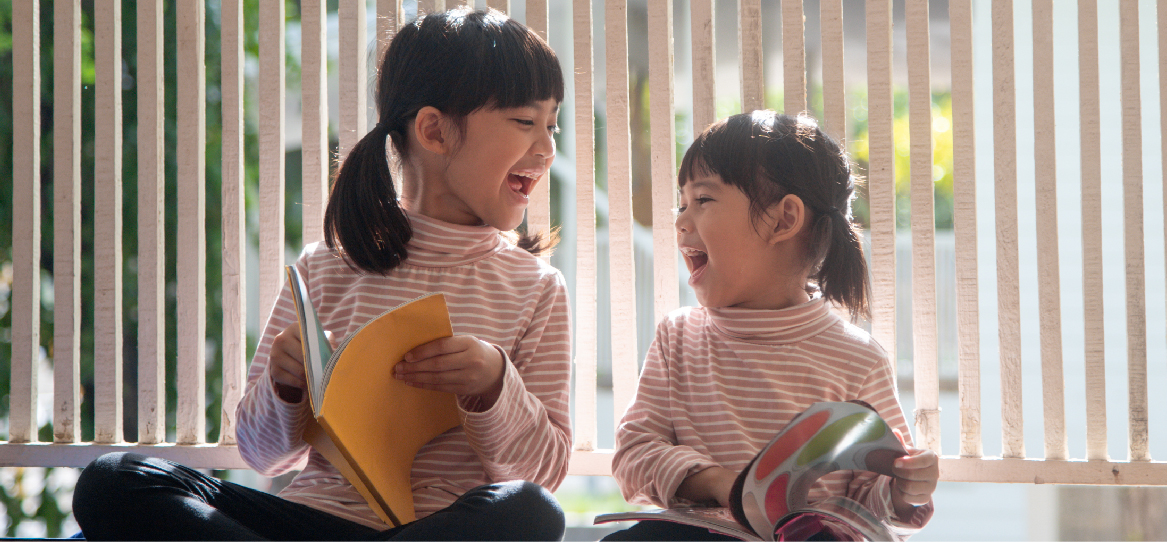
November 15, 2023
5 Recommended English Books for Preschoolers
Do you know why it’s encouraged to read to your child? It’s because it’s one of the most effective ways to practise and improve their English language skills. Your child’s exposure to books helps them understand the language and nourish their imagination, which helps expand their world.
If you’re still not sure what benefits your little one can get from you reading to them, you’re on the right page! We’ll talk about why reading to your kids is important, introduce some classic books to read to your preschooler, and more.
Why read to your kids?

1. Improve literacy skills
When you read to your kids, it helps develop critical language and enunciation skills. When they can learn to read on their own, they’ll be able to read more words and understand the context of the book better as a result.
2. Extends vocabulary
Reading to your child exposes them to new words. In fact, a 2019 study estimated that kids whose parents read to them regularly in the 5 years before kindergarten are exposed to 1.4M more words than children who haven’t been read to!

3. Enhances creativity and imagination
When you read to kids, you help them picture the characters of the book and visualise the story settings. This feeds their creativity, which is a useful skill for developing ideas and innovation.
4. Improves concentration
Regular and consistent reading can help to improve your child’s concentration abilities as well. It’ll also help them to learn to sit still and concentrate for long periods of time – a good practice for their schooling days!
5. Develops empathy
When we read to our children, they take on the perspective of the characters. This results in developing empathy as they understand other people’s feelings and emotions.

6. Gain a deeper understanding of the world
Through books, your child can be exposed to various ideas, beliefs, attitudes, places, and real-world situations which can enable them to become open-minded.

7. Parent-child bonding
Most importantly, reading to your child is an excellent activity that fosters parent-child bonding. It’s a nice way to spend time together and slow down at the end of a hectic day!5 Classic Books to Read to Your Child

1. Make Way for Ducklings by Robert McCloskey
Published in 1941, this book remains a classic up to this day. Set in Boston, Mr and Mrs Mallard fly all around to look for the perfect place to hatch their ducklings and live. The parents teach them survival skills, including moving them from one place to another as they grow old.Central theme: FamilyRecommended age range: 3-7 years old
2. Are You My Mother? By Eastman P.D.
This book, edited by Dr Seuss, is about a baby bird. His mother leaves her egg alone and flies off to find food, thinking her egg will stay in her nest where she left it. The baby bird hatches and immediately hurries off to find his mother. However, not knowing what she looks like makes it a challenge.Theme: Sense of belongingRecommended age range: 3-7 years old
3. Corduroy by Don Freeman
This classic book for preschoolers follows a story about a teddy bear in the department store waiting for someone to take him home. A little girl named Lisa wants to buy him. However, her mother pointed out that his overalls are missing one of the buttons.With its bold and bright illustrations, as well as appealing characters and an easily understandable and relatable plot, it’s one that’ll keep your child hooked.Central themes: Friendship, kindness, sense of belonging, hopeRecommended age range: 3-5 years old
4. The Very Hungry Caterpillar by Eric Carle
This popular children’s book follows a caterpillar’s development. This English book is short and colourful with lots of repetition, making it perfect for preschoolers. It also teaches basic concepts such as counting and the days of the week.Central theme: Benefits of eating healthy foodsRecommended age range: 2-7 years old
5.Goodnight Moon by Margaret Wise Brown
This book is a classic children’s bedtime story about a little rabbit saying goodnight to the items in his room before going to bed.This story includes rhyming words, colours, and reading comprehension, making it a perfect reading book for your preschooler.Central theme: Sense of security before falling asleepRecommended age range: 2-5 years oldSome Tips to Have Effective Reading Sessions

Make it part of their routine
Try to read to your child every day (or night!). Incorporate this into their daily routine as much as possible until it becomes a normal part of their day, much like taking a shower.
Encourage variation
By having a variety of books, you open your child’s eyes to a range of cultures and characters and allow their creativity and imagination to thrive. Plus, it’ll also make reading time more interesting both for you and your child!
Have patience
Read slowly. You can even point out the words as you’re reading, and take the time to explain to them whenever they don’t understand something.

Continue the discussion
After putting down the book, you can make it an engaging session by asking questions about the book. This way, you engage their critical thinking skills and encourage conversation and communication, which are key skills for success both in school and life.Cultivate a lifelong love of reading with My Little Campus
No matter what book you choose, it’s important that you use books as a tool for your preschooler to learn and understand the English language better, as well as expand his/her perspectives. There’s so much that little ones can learn from literature!
That’s one of the reasons we emphasise reading at My Little Campus. That said, we use many other tools and activities to ensure children’s language skills and more can grow when they’re in our care!
My Little Campus offers everything from enrichment experiences to comprehensive programmes on subjects such as English, Mathematics, and even Mandarin. In this way, we help children achieve their true potential while setting them up for success. Visit our website to learn more!
-

November 14, 2023
4 Activities to Nurture Creativity In Your Children

It’s perfectly normal to wonder how you can aid your child’s development as they grow. Fortunately, there are a lot of ways you can do that, and one of the best options available to you is creative play.
This is because having creative experiences can help a child grow emotionally, socially, intellectually, and even physically. In fact, this is also why a lot of schools support creative learning now!

Intellectual benefits
Creative play helps develop basic Math skills, including basic geometry, shapes, measuring, and sorting. It can also hone their focus as well as the ability to problem-solve issues they may run into in play, like whether or not glue can hold together something they’re constructing.
Physical benefits
Creative learning activities also develop a child’s fine motor skills, coordination, and control as they use their fingers to cut, paint, draw and paste. This can even help them become writing-ready!
Emotional and social benefits
Creative activities provide a positive outlet to express emotions so the kids can learn how to communicate beyond verbalisation. Some creative play even helps with self-regulation skills. For example, we teach them the art of patience by waiting for the paint to dry.
Self-esteem building
Arts and crafts can also give your child a sense of achievement and promote pride in their work, which in turn builds self-confidence. It’s also a great way for your child to discover that it’s okay to make mistakes, and that even mistakes can lead to new discoveries!4 Creative Activities with Benefits for Children

1. Oil pastel painting
This is a great activity that quieter, more artistically inclined children will love in particular. Plus, it’s pretty much a gateway to many other types of painting!
Things you’ll need:- Drawing paper
- Oil pastels
- Baby oil
- Cotton buds
What to do:- On a drawing paper, let your children draw their favourite things with the oil pastels. Ensure that they fill them in with colour. Even if they look like they’re just scribbling, let them – their imagination will lead them.
- Once done, smear some baby oil on the painting with a cotton bud and use the oil to blend different colours on the painting. If your child is old enough, you can even get him/her to help you blend the shades!

2. Raised salt painting
Think of this creative activity as diamond painting, but with salt! Aside from stimulating your child visually, it adds tactile stimuli through the texture of the salt, which can add a new dimension of interest for kids.
Things you’ll need:- Food colouring
- Glue
- Drawing paper
- Paper plates
- Pencil, and of course
- Epsom salt
What to do:- To make your coloured salt, add a few drops of food dye to Epsom salt on a paper plate, then mix. You can repeat this process depending on how many colours your child wants, using new batches of salt each time.
- Let your little artist draw shapes, scribbles, and patterns on the drawing paper.
- Apply glue to the areas that you want to be covered with salt, then pour the coloured salt over the glued area. Wait to dry.
- You can also print a colouring sheet instead and use it as a guide. Apply different coloured salts to different areas.

3. Playdough modelling
This learning activity is great for preschoolers as it’s easy and very simple to do. You can even provide them with just the playdough and let their imagination run wild!
Things you’ll need:- Playdough
- Playdough cutters or tools (optional)
- Playdough mats (optional)
What to do:- Give your child some playdough and let him/her make shapes out of it. You can sit next to your child to assist him/her, or let your child have fun making his/her own.
- Try using playdough cutters and playdough mats to make textures on his/her shapes! You can even offer (clean) biscuit cutters and use those to cut shapes out of a layer of playdough.

4. Water balloon painting
This activity can get messy and wet, so it’s best to do it outdoors! Take note that this isn’t balloon splattering, by the way – instead, you’ll use the balloons as paintbrushes for a new sensory experience.
Things you’ll need:- Water balloons
- Washable paint
- Large paper roll or sheet
What to do:- Begin by filling up some water balloons with water. (Try not to fill them up too full as you don’t want them to burst while painting with them!)
- Lay the large sheet of paper down and secure the corners so the wind doesn’t blow the paper away. You can use books, rocks, shoes, etc.
- Dip the balloons in washable paint and let the kids use them as paintbrushes, rolling and dragging them over the paper to make shapes and patterns!
- Make sure to let the artwork dry before moving it!

Tips to Make Clean-up Easier
Kids love arts and crafts, so we’re sure they’ll have a good time with the activities we suggested. Be warned, though; there’s a very big chance that things may get messy! That’s why we have listed down some ways to have an easier time cleaning up after every arts and crafts session.
- Put an old sheet, old newspaper, or garbage bags underneath your activity area. Old shower curtains work well too!
- If you’re using your dining table, cover it with a vinyl tablecloth. You don’t want paint or scratches on your actual table’s surface.
- Have towels, wipes, and tissues nearby to immediately clean messy hands and wipe up spills. Try to prepare wet wipes or a bowl of water just for cleaning!
- Dress your child (and yourself!) in clothes that you wouldn’t mind getting dirty or stained. You can also use aprons.
- Ensure that they only stay within the designated play area. Otherwise, you’ll have more clean-up to do.
Unleash your child’s creativity with My Little Campus
It has been said that creation is the highest form of learning. The earlier we expose our children to creative activities, the sooner they will be able to understand how to approach discovery and education in life.
Plus, it does more than give them access to creative outlets good for their mental health. It can also support their emotional, physical, and social well-being. In fact, many skills relevant to their overall growth as confident learners and contributing members of society can be sharpened through creative activities.
At My Little Campus, we emphasise the value of creativity in our programmes. If you want your child to be raised in a world where their creativity is given free rein, reach out to us. We offer comprehensive academic programmes for children aged 18 months to 6 years. Visit our website to learn more!
-

September 22, 2023
5 Tips for Choosing a Child Care Centre

As a working parent, you know that one of the most important decisions you can make is choosing a childcare centre for your little one. You obviously want to choose what’s best for them – but there are just so many factors involved that it’s overwhelming!Luckily for you, we’ve rounded up five tips below that’ll help you get through the process. With these, you should easily find the right child care centre for your growing child.

1. Do your own researchDon’t just rely on best-of lists online! If you know of other parents with children of similar ages or older, go ahead and ask for their recommendations. Chances are they have their own good (or bad) experiences to share about different centres.
And if you’re new in town, you can check the listings of centres recommended by government agencies such as the Early Childhood Development Agency (ECDA). You can also check with your OB-GYN or with fellow parents you’ve met during birth classes.
Making a checklist can also help you narrow down your options. This checklist should consist of all of the most important qualities and factors for your consideration, such as location, accessibility, cost, schedule and more. This way, you see where your priorities are, making it easier to decide and look for options that are in line with what you need.

2. Plan a visitOnce you’ve shortlisted all the child care centres that you’d like to consider, set up a time to visit them. If you can manage it, try to do this unannounced – this way, you get a real, casual feel of what each centre is like during school hours.
Aim to observe for at least 30 minutes and imagine your child in the setting. Would they be comfortable in that space? Would they be safe while also being allowed to grow? You can actually observe the children at the centre to make this easier. Do they look happy, engaged, and comfortable?
Observing the teacher also helps. How do they approach the children? Are they attentive and responsive? You’re looking for teachers whose interactions with the children are warm, respectful, age-appropriate, and always at eye level.
And last but not the least, check that the centre is clean, healthy, and child-safe for your baby.

3. Ask the right questionsTo get to know the childcare centre better, it’s important to ask comprehensive questions. Here are some of the most important questions you can ask the school for a start:
Question: What’s your cost (tuition, application fee, miscellaneous fees)?
If they’re way out of your budget, you can cross them off your list quickly and conserve energy that way. That being said, it’s best not to make the budget the main deciding factor when it comes to choosing a child care centre.
After all, you still want to look for a high-quality childcare provider. When a child care centre is costly, it’s usually because they hire highly experienced and certified teachers to plan and conduct activities that will help in a child’s holistic development (check this, of course!). You also have to factor in the paraphernalia that the child care uses for their learning activities. Better, more cutting-edge tools tend to cost more!
Question: Is there a waiting list?
Some child care, especially those targeted at infants and younger babies may have waiting lists. So if you have a younger child, it’s better to start looking earlier.
Question: What’s your accreditation?
Now, it’s worth noting that this doesn’t directly affect your child: an accredited school doesn’t necessarily guarantee that your child will get the teacher’s full attention in the child care. However, as a parent, it can bring peace of mind when you know that your child’s school is of a higher standard, and is licensed and registered.
Question: What’s the teacher-to-child ratio?
Babies and young toddlers need a lot of attention, and if a teacher has too many children to see to, that can result in one child not getting enough oversight or care. To ensure the utmost safety and support for your child, it’s good to know how the facility sets its limits for how many children each teacher has to look after. If you don’t know what a good ratio might be, the ECDA has set the teacher-child ratio for different age groups here.
Question: What’s your child care policy?
It’s important to share the same parenting philosophies with your childcare provider on topics such as discipline. Do they do time-outs? How do they manage the children’s behaviour in class?
Furthermore, you can ask questions such as: Is the TV used all day? What snacks do you provide? When are naps offered? If a baby is being fussy, how do you put them to sleep? If they diverge on too many things from your own policies, you may want to look elsewhere.

4. Know the warning signsLook out for any red flags such as children who may be unengaged or staff who don’t try to engage with the children. A lack of structure to the programme in the centre can also be a red flag. Check too that teachers are responsive to children’s requests.
One of the warning signs that may be surprising to you is when the room is too clean and organised. While cleanliness is important and a must, children should be allowed to explore, play, pick up things, play with toys, create and investigate – in short, be active. So a little mess is good sometimes (and expected)!
Moreover, when looking at these signs, it’s important to trust your gut. It doesn’t matter that it’s a popular child care centre that everyone around you is raving about if you feel something’s off about it. Look elsewhere if something in you is saying it’s not right!
Remember, a child thrives (and deserves to be) in nurturing conditions. And if you think that the place isn’t for your child, explore other options until you find the one you feel most comfortable with.

5. Familiarise yourself with their programs and activitiesYou should also ask what programs are currently being offered to the children. Take the time to find out what lessons are being taught and if they’re age-appropriate. Ideally, you want a good balance between learning and play.
Some centres may offer school-readiness programs and a variety of enrichment activities, which may be something that you want for your child. Another point you may want to check about is whether or not there’s regular feedback provided so you can keep track of your child’s progress.
Ready to explore?
The tips above should give you an idea of how to find the best child care centre for your little one. And if you find yourself still struggling, try visiting one of our own centres to get an idea of what to look for. My Little Campus is trusted by many parents like you for several reasons, and seeing them for yourself can give you a good reference for what to seek.
Our curriculum has been specifically designed for all-rounded development, for instance, which ensures every part of children’s growth is accounted for. We prepare children not just to achieve academically but also to thrive in life’s many other endeavours, and that’s something you can look for in a centre.
In any case, you can also contact us to learn more. You can also register your interest in our own preschools and even schedule a tour of one of our centres, to see if it’s what your child needs!
-

September 21, 2023
Tips for Overcoming Separation Anxiety on the First Day of Preschool
Congratulations – you’ve reached another milestone with your child starting the first day of preschool!
Unfortunately, as joyous as this occasion sounds, it often comes with a lot of crying, uncertainty, and anxiety on your kid’s part. Having spent their early years primarily around their caretakers and spending time at home, many children simply don’t know what to expect in school.
This can become a big source of separation anxiety when they finally have to enter preschool. As a parent, though, you can do a lot of things to help. Today, we’ll give you effective strategies that can make the first day of preschool more comfortable – for both you and your child.

1. Visit the school
Before the school year starts, try bringing your child to the school. Familiarising them with all the activities as well as the people will definitely help to ease the anxiety. It doesn’t need to be a trip into the school from the start either: it already helps to start casually pointing out the school to your child whenever you drive by.
When talking about your child’s school, say its name and say things like this: “Next week you’re going to My Little Campus and you’re going to play with all your friends! Isn’t that exciting?” This way, you build up familiarity with both the word and idea of “school”. Choose to associate positive words and feelings with the school as well so that they think well of it before they even go!
2. Schedule play dates before the school year
While some of us enjoy meeting new people, others may not. This is true of children too. Some children may find it hard to socialise with other kids. That’s why it’ll help if you can set up playdates with some of their classmates or get them used to meeting new people. This way, when the big day comes, your child can take comfort in seeing a familiar face or two in school from the very beginning.
You can set this up with a family friend who goes to the same school, or coordinate with another child’s parent. This way you’ll be able to meet the other parents as well!
3. Establish a goodbye routine
Creating a goodbye ritual (kiss on the cheek, or saying “See you later, Anna!”) can help to decrease children’s anxiety on the first day of school. It’s a great way to create familiarity and comfort, giving them a clue of what’s about to come.
Moreover, it’s important that this routine should be quick. If you dwell too long on it, your child might be preoccupied with your presence, causing them to cry and panic instead.

4. Practise being apart
This is important if you’ve never spent extended time apart from your children. Start with short intervals – 5 to 10 minutes – in which you run an errand or take a quick jog while a family member, friend, or sitter looks after your child.
You can gradually acclimate your child to the separation by slowly increasing the time you’re apart. Try going to playdates at a close friend’s house or leaving them for the whole day at a relative’s house, for example. You basically want to ensure they’re taken care of even as you get them used to the distance from you.
This way your child will feel less anxious when they’re apart from you while at preschool.
5. Let your child know when you’ll come back
It’s important to be specific with your child when discussing your return. You can say things like “I’ll be back after nap time!” and that gives them a nice sense of expectation as to when you’ll actually come back.
If you’re wondering why our example uses “after nap time” instead of an exact hour such as 3 PM, it’s because most children at this age wouldn’t understand what 3 PM means yet. It’s important to provide specifics in a way that they can understand.
6. Go to bed early
Hungry and tired kids are cranky and clingy kids – and that’s behaviour you don’t want (especially) on their first day of preschool.
To avoid this, put them to bed early so that both of you can wake up early and refreshed. Waking up early also means that you’ll have time to prepare a big, nutritious, energy-boosting breakfast for your child. This way, you prepare them for school both mentally and physically.
Plus, it enables them to go to preschool early and with a calm state of mind. It also gives your child more time to settle in before the other children arrive.

7. Get them excited on the way
On the way to preschool, say positive and exciting things like this: “I’ll bet you’ll eat lots of yummy snacks today!” or “You’ll probably make a new friend!” In other words, start the day right by ensuring they go with a positive mindset.
It’s important to not suggest negative reactions at this point too. For example, don’t tell them things like “Don’t cry when I leave” because that’s just more likely to give them the idea of actually doing it. The same goes for making comparisons (e.g. “Your friend Hannah never cries in school”). Be positive all throughout!
You can even continue the positivity by giving them a reward after school for making it through their first day – perhaps their favourite snack or a new toy.
8. Bring a security object
Comfort objects, such as a child’s favourite plushie or blanket, can give a real sense of security to a child when placed in an unfamiliar environment. So, if the school allows, let your child bring their security object to school.
However, if they don’t have any, you can technically make something right there! Give them a photo or your own hanky that they can keep until you meet again.
9. Keep a positive mindset
Children are far more sensitive than most realise. Your child can pick up your mood and will take cues from you, so as much as possible, ensure that you keep your cool, always smile, and be confident. When they see you being positive in both speech and body language about going to school, they’re more likely to do the same
Help your child become a confident, independent individual
Leaving your child at preschool for the first time can be tough on both you and them… but it’s necessary, as it’s the way your child discovers the world outside of your home and begins to learn independence. This is why it’s so important to choose a good preschool too: with one, you know that you can let go and trust that your child will be in safe hands.
Are you ready to give your child the opportunity to learn self-reliance and independence in a safe and secure environment as well? Contact us! My Little Campus is a childcare provider in Singapore with dedicated teachers committed to helping your child reach full potential.
We can show you how we guide the little ones in our care through key milestones, including that very first day of preschool. You can also take a look at our facilities to see what your child will have access to if you register. And of course, you can ask us all of the questions you like about how we help parents through these early years – so, reach out now!
-
August 7, 2019
What is the Best Age to Start Kindergarten?

Enrollment for primary education at 7 years old is made compulsory for every citizen of Singapore. Due to the competitive nature of its educational systems and increasingly academic subjects taught in schools, some parents begin early education plans as they are concerned or confused on when and what age should their toddlers enroll into reputable kindergartens and preschools.
According to Ministry of Education Singapore, the holistic development of children is the most vital at the preschool level and by the time they leave kindergartens to pursue primary education, children must already possess self-confidence, social skills and be equipped with necessary basic academic knowledge. With the grade classification provided by the Singaporean government, the recommended kindergarten age should begin by the age of 4 years turning to 5 years as K1 and K2 is for children aged 5 to 6 years old.
Developments and Growth in Children
Every child’s growth is different. Speed and skills vary, and a child’s inclination changes over time. Some will be stronger in hard skills, and for others, soft skills will be their advantage. The best age for enrolment may differ due to the circumstances observed in the child’s developmental stage.
Since kindergartens have their own daily activities for children to follow through, children are expected to be well-behaved throughout the classes with minimal interruption. The preschools syllabus and education consist of learning English as the first language and building a foundation in the Mother Tongue. Alongside mastering the ABCs and 123s, children acquire soft and hard skills and most importantly, it is preparation for formal education after kindergarten.
Is Early Enrolment Better for My Child? Should My Child Be Older or Younger?
There is a noticed trend where the cut-off age for attending kindergartens has been lowered by parents who are becoming more competitive to prepare their children for primary schools. The age of children starting preschools or kindergartens vary due to privately established institutions which gives them different access to accept enrolment of many different age groups of children starting from an early 3 years old and above. However, the school fees may cost more as the schools have to care for their young ones who are mostly not potty-trained and with only basic communication skills.
Skoolopedia reports that more and more kindergartens are accepting children from the age of 3 years, which even parents believe is the golden period for children to finally explore and inquire about the bigger world outside of their original home environment. Do note that this is not available at most preschools and that the recommended age by the government is still 4 years old.
In conclusion, education in Singapore is really being looked upon as something that is worth the time spent researching and planning for your child. Due to a competitive education landscape, it is no wonder that children are encouraged to learn as early as possible and as much as they can to give themselves a better standing.
What’s most important is that as a parent, you have the most intimate and best understanding of your child. Both you and your child must be psychologically, academically and emotionally ready to start kindergarten before embarking on this educational journey.
Read more about our Kindergarten Curriculum here.