
upcoming events
-
August 7, 2019
Is My Child Ready for Kindergarten?

How ready your child is for the first level of education is an important factor that can determine the smooth transition into a larger educational and social environment, starting with a kindergarten school. If your child is not ready or unprepared, it may negatively influence his or her perception on school and this can also affect motivation, social relations and self-confidence. Being prepared does not only refer to funds and finances set aside but also whether the child is socially or emotionally prepared for this next step. Hence, it is the parents’ duty to soundly judge if their efforts are optimum in preparing their child for kindergarten.
The most basic method to measure kindergarten readiness is cut-off dates. That is when your child turns 4 years old in Singapore, as laid down by the government and kindergarten operators. Based on the grade classification in Singapore, kindergarten years can be divided into two grades: K1 is for 4 to 5 years old and K2 for 5 to 6 years old. This is considered as the most appropriate age to attend kindergarten.
However, behind the scenes it is different. Parents are the best persons to determine whether their child is ready for kindergarten because they can gauge by everyday situations intimately how their child interacts with others and adapts to new environments. If you are still unsure on whether your child is ready, it is wise to consult your child’s paediatrician, playgroup teachers or caregivers to obtain a second opinion.
How Do I Prepare My Child for Kindergarten?
Parents can help their children by preparing them during their nursery years of up to 4 years old. This can be achieved at home and in preschool. Create opportunities for conversations between you and your child, provide ample time for play and remember to keep learning fun and relaxed to keep your child engaged and positive towards learning.
Exposure to New Environments and Peers
You can also consider frequent exposure to different social environments from as young as less than a year old, so the child would not feel awkward and unsafe when meeting new faces in new situations and in foreign surroundings. Bring them out to libraries, museums and other social events. Set up playdates with other children of similar ages and attend workshops or events as a family to nurture a confident and socially adept child.Reading Aloud to Acquire Speech and Comprehension Skills
Seek to expand their learning horizon each day by teaching new things or sharing wide conversational topics. One way to do this is through reading aloud to your child. Make the sessions fun and interesting by including play time, hands-on elements and singing nursey rhymes. Rhyming helps as a basis of language and memory development. To make the idea of school more relatable, parents can choose to read aloud books that talk about going to school – some suggestions can be found here.Help Your Child to be Psychologically and Emotionally Prepared
Lastly, encourage your child to anticipate kindergarten. Show to them where their future school is, tell them about the class timetable and arrange for them to visit selected kindergartens during open days. Talk your child through the various feelings involved and pay attention to the words they use and their emotions towards the matter to know how best you can support your child in this school transition.What Skills Should My Child Have Before Kindergarten?
Self-care and Awareness Skills
A child is expected to already possess basic skills such as dressing oneself, to use bathrooms on his/her own, and to be able to clean up after oneself. The child also expected to know some personal information like name, birthday, parents’ names and/or contact numbers, and be able to recognise his family members.Academic Learning Skills
A smoother transition into kindergarten would occur if he possesses other learning skills like being familiar with the alphabet, understanding word rhymes and have a certain amount of vocabulary, spelling his or her names, using a correct grip when holding writing materials, bouncing a ball, identifying shapes, counting to ten and more. If you required a more detailed list, this article has more information.Social and Emotional Skills
Another aspect that is not less important is a child’s ability to communicate well with other adults and their peers. A child must also be able to listen to lessons and observe basic rules like sitting still and following teacher’s directions. Emotional readiness is also important. Is your child able to get along in a group? Can he/she transition easily from one activity to another? Is he/she independent and curious enough to separate from you for an extended period? These are questions you should consider aside from your child’s academic progress.What is Done at a Kindergarten Screening?
Some kindergartens require a kindergarten screening session or a readiness test to be conducted before enrolment. At these screenings, you may need to bring along your own identification card and residential proof and your child’s identification documents and health records, especially vaccination and immunization. Among the skills assessed are self-care skills, language skills, cognitive, gross and fine motor skills.
These screenings are conducted for the kindergarten to see if your child is developmentally ready to start school, to help familiarise your child with the kindergarten environment and classrooms and also for parents to see if the kindergarten is a good fit for their child.
Now that you have a clearer picture on what to look out for in your young child, take some time to find out more about these aspects and seek help where needed in guiding your child. After all, creating a conducive learning environment at home to prepare the child is no mean feat. Letting your child meet his/her peers also has the benefit of parents meeting others going through a similar life stage. As the saying goes, ‘it takes a village to raise a child’, and that is no different even in Singapore. We wish you all the best in this journey of growing with your children. Applying the above for your child is just the beginning.
Read more about our Kindergarten Curriculum here.
-
August 7, 2019
Is it Compulsory to Send My Child to Kindergarten?

The official primary school age in Singapore is seven years old. Preschool and kindergarten attendance before primary school are not compulsory but due to the rigorous nature of education in Singapore and to empower younger generations through education, the government and various community groups highly encourage parents to send their children for kindergarten education as much as possible.
The benefits of attending kindergarten far outweigh the cons as enrolling in preschools can improve the child’s chance to succeed in later years, especially if they are from families that lack financial stability. Excelling in education from a young age is one way to mitigate this. Thus, the government provides support through subsidising kindergartens operated by the Ministry of Education and childcare centres operated and regulated by the Early Childhood Development Agency for children younger than 7 years old.
Is it Mandatory to Go to Kindergarten?
Hence to the above question, we can positively say it is not mandatory as with legal consequences, but unless you want to deprive your children from learning opportunities, then you may choose not to send them to any. When you and your child are ready to embark on the education journey, that is a good time to commence enrolment. In fact, children should achieve certain key stage outcomes after kindergarten years. Holistic development of Singapore’s future generations is of utmost importance because the government knows that the best investment it can make for its people is through education.
Other than building their self-confidence and enthusiasm for life-long learning at kindergartens, children should master language and communication skills, learn how to share and relate with others, have their curiosity aroused, know the rights from wrongs, develop physical coordination and motor skills suitable with their age, cultivate healthy habits and many more. It is not to say that a home environment cannot provide the same growth opportunities for children, but in kindergartens all the above are considered as part of a child’s individual growth objectives and monitored closely by caregivers and teachers at the kindergarten.
Can You Skip Kindergarten?
Skipping kindergarten education is not usually advised. In a country so focused and committed in education, leaving out the early years of education for a child is an equivalent to giving them a hard start in life. For every day that their peers are developing various life skills in a growing environment with trained teachers and caregivers, the child will be limited to a solitary home environment. A high margin of subsidy is available and more information about it can be accessed here. Though it is difficult for some, financial support is available for parents to truly give the best they can for their children.
How Can I Enrol My Child into a Kindergarten?
In Singapore, you may need to register early, around March or April the year before your child is estimated to start preschool. The preschool education can begin as early as 2 years old, attending what we call nursery schools or childcare centres, until they are 4 years old (N1 and N2 respectively). Then they may continue with kindergarten education (of K1 and K2) for children aged 4 to 6 years old. The school fees range depending on the type of kindergarten school. On the year they turn 7 years old, they can embark on their primary school education prepared and with ease and confidence.
As loving parents, we want to give our children the best start possible in life. Despite the rigorous and competitive education system, this fact also shows that much emphasis is placed on the importance of education. Through the aid of government subsidies and the large number of kindergartens available to the population, our young children can build strong foundations with an early head start.
Read more about our Kindergarten Curriculum here.
-
August 7, 2019
How Much Does Kindergarten Cost in Singapore?

The high costs, quality and standards of living in Singapore are no secret. Likewise, education in Singapore can come with a considerable price tag too. Preschool education is largely subsidised by the government and the differences in cost are mostly due to the choice in preschool type and if additional enrichment classes are included in the costs. These choices require informed financial decisions and possibly even starting an education fund for your child as soon as he/she is born.
In this article, a variety of information on costs and prices of preschool fees have been collated to give a broad overview and help with planning for your child’s kindergarten education. Kindergarten refers to programmes provided for K1 and K2 children aged 4 to 6 years old or when parents deem their young child ready for kindergarten education.
Government-Operated Kindergartens
There are several early childhood programmes available in Singapore, each with a different range of fees. Government-operated programmes are the most affordable due to the subsidy provided. These are known as Ministry of Education (MOE) kindergartens.
For the 4 hours half-day programme (2019 and 2020), Singaporean citizens are expected to pay S$160 per month per child, and S$320 for permanent resident children. If you are sending the child for the full day programme, there is a KCare programme operating from 7 AM to 7 PM with costs ranging between S$325 to S$386.
ECDA Anchor Operator Kindergartens
Another type of early childhood education available in Singapore is childcare centres regulated by Early Childhood Development Agency (ECDA). This government scheme of Anchor Operators (AOPs) provides support to childcare and kindergarten operators to help keep fees affordable and increase access to quality early childhood care and education, especially for those in the lower income group.
Government grants are given to help offset staff wages as the maximum fee collected per child monthly for kindergartens is capped at S$160 (excluding GST). For young parents who are just starting out in their careers and life, you can apply for financial assistance provided by the government through Kindergarten Fee Assistance Scheme (KiFAS), Kindergarten Care (Kcare Subsidy) and the Start-Up Grant.
Private and International Kindergartens
International kindergarten refers to an early childhood education centre that follows external curriculum and develops its own programme separate from the government’s education approach. They usually have their own holistic educational methods and systems. Some even accept children younger than 4 years old into their kindergarten programs. Thus, the fees are usually higher that government subsidised preschools. Moreover, they operate without subsidy from government.
Be sure to check that their kindergarten programmes are accredited by the government. Monthly kindergarten fees can vary from S$800+ to S$5,000+. This amount does not include registration fees which can go as high as S$4,000.
Average Prices of Kindergarten Fees
Based on the price ranges above, the average kindergarten fees in Singapore is a bit high on the scale. Below is a comparison table of what will cost you on average monthly and annually, based on which preschool programme you choose:
Preschool and Kindergarten Programmes Full day per month on avg. Half-day per month on avg. Annual Costs MOE Kindergartens S$375.00 (childcare) S$150.00 S$4,500.00 International Kindergartens S$9,600+ to $60, 000 S$9,600+ to $60, 000 S$9,600+ to $60, 000 ECDA Anchor Operator Kindergartens S$720.00 (childcare) S$160.00 S$8,640.00 Remember that the cost shown does not include the costs of transportation and transit, and possibly other fees such as registration fees, uniform and material fees. The amounts shown in the table are the prices before GST (Goods and Services Tax) which will add to the final amounts paid in the end.
Knowing this beforehand may help to save parents trouble later. Early planning will help to alleviate the brunt of financial burdens young families may face as they raise children. The cost of kindergartens in Singapore has changed over the years with higher subsidies from the government to better support parents who seek quality education for their children.
Read more about our Kindergarten Curriculum here.
-
June 18, 2019
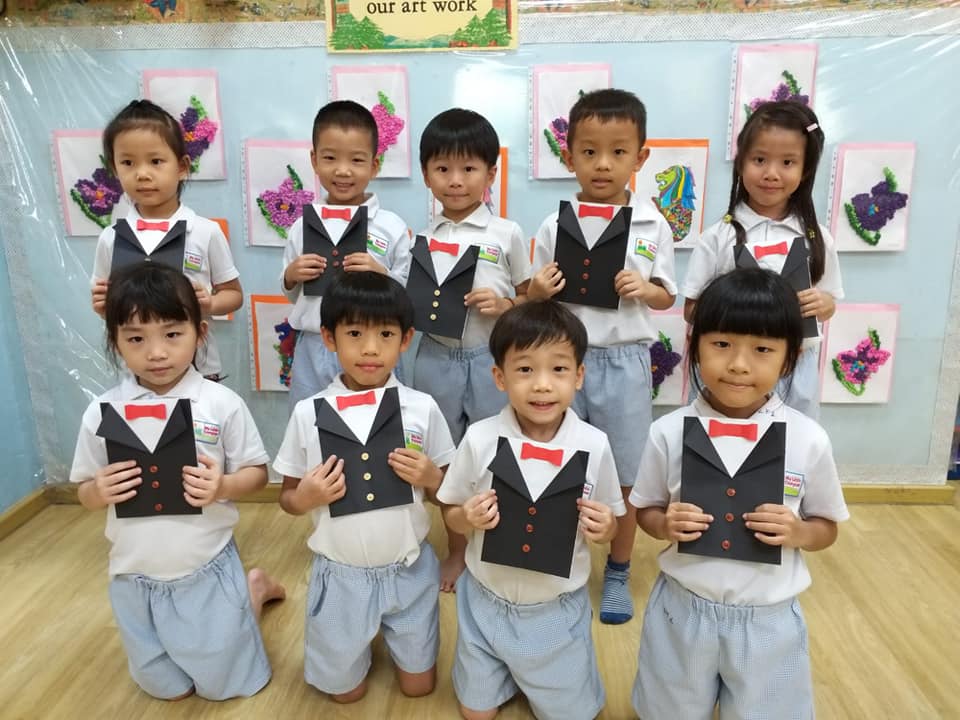
Mother’s & Father’s Day @ MLC Pasir Ris
Both very special and important figureheads in a child’s life will be his/her parents. In Pasir Ris, our children made special hand-made gifts for their parents to express heartfelt gratitude towards the people who raised them up.
A small thank you goes in a long way in maintaining healthy relationships. In MLC, we hope these small gestures will become part and parcel of our children’s approach in maintaining healthy social relationships with people.
-
June 7, 2019
Why Do You Need Playgroup for Toddlers?

Infant care, toddler care, playgroup, childcare, nursery and kindergarten are the different types of care services and foundation learning centres that are available in Singapore for children before they begin their primary school education.
A playgroup is generally designed for children from 18 months old up to 3 years old. Each session tends to last for a few hours. A playgroup can be adult accompanied as well, with the activities led by teachers or facilitators.
Attending playgroup is not necessary for children who have a full-time caretaker, who can fully dedicate their attention on the child’s growth. At 3 years old, this is the age where children are like sponges, readily absorbing information and knowledge.
One of the best things about playgroups is that they provide a social setting that gives children opportunities to pick up and practice their social and communication skills. The guided learning inculcates a culture of eagerness to learn and concepts are introduced earlier.
Activities like storytelling, identification of objects as well as basic skills such as feeding themselves, using the toilet and being independent at an early age are important. By starting young in a playgroup, a child can adapt and be comfortable with a routine suitable for learning and development.
With the right balance of lessons, sharing in playgroups, as well as multi-sensory experiences such as stories, music, dances and kinesthetic activities, your children will pick up both cognitive and emotional quotient skills during the playgroup.
Some centres allow parents to sit during the playgroup for them to observe their children. However, some centres do not allow parents to enter the childcare as they could potentially disrupt the playgroup or might even cause stress to the child.
For parents who have shy children, check with the playgroup whether there are instructors who can accommodate to shy children. The instructor can guide them by connecting with them, encouraging them to express their needs, help with verbalizing their thoughts, and build their confidence in speaking up.
To prepare young minds for the future, it is essential for children to pick up social awareness and empathy at a young age. All these skills can be picked up when your children participate in a playgroup.
Ultimately, children are more active learners and they learn better with visual and physical stimulus. Dynamic activities in a playgroup can encourage children to embrace the culture of learning and think of class and learning as a fun activity rather than to fear it. Playgroups will help to aid this.
To find out more about the Playgroup curriculum offered for toddlers at My Little Campus, click here.
-
June 7, 2019
How is Singapore Nursery Important for Children?

In Singapore, nursery is commonly referred to as a childcare centre or as preschool education.
Kindergartens in Singapore provide up to 3 years of preschool for children aged 3 to 6 years. Attending nursery is part of the 3 years program.
Kindergartens provide an environment for children to learn how to interact with others, and to prepare them for formal education in a primary school in Singapore. Lessons can range from learning languages, arithmetic numbers, development of personal and social skills, games, music and outdoor play.
In Singapore’s education, every child must learn 2 formal languages, English and their Mother Tongue (Malay, Tamil or Mandarin).
In total, at the date of writing, there is a total of 1,515 childcare centres available in Singapore.
However, parents have the option to home-school their children or send them to nursery with experienced educators and a curriculum that best fits the age group. Currently, the total enrollment in childcare services is at 117,542 and the trend has been increasing. Why are more and more parents sending their children to childcare centres?
Benefits of Attending Nursery in Singapore
At the preschool level, a child’s holistic development is crucial. Singapore’s preschool education has been emphasizing on the need for children to build up confidence and equip children with skills and character, a disposition for life-long learning and social skills to interact with their peers.
While attending a preschool or nursery are not compulsory in Singapore, parents are free to homeschool during the preschool period before the child turns 7 years old and is eligible for primary school education in Singapore.
In nursery, children will attend structured lessons, participate in class and school activities and grow in important life skills such as:
- Interaction with their peers and adults
Social interaction allows children to learn about communications, developing their confidence to interact with their peers and adults. Also, it inculcates the values of respect, manners and empathy. Throughout this period, children can develop themselves more emotionally, allowing them to grow up as an individual and shape their character.
- Allow themselves to develop self-independence
In a nursery, children are encouraged to work independently when they are working on tasks assigned by their teachers. This allows the children to develop their critical thinking by solving problems by doing their tasks independently.
- Parents can be assured
When sending their children to preschools, the parents can be assured in that the children are safe in a conducive environment surrounded by passionate and experienced educators. This also reduces the workload on the parents as they do not have to stay in at home to homeschool their children, giving them more time to make a living, accomplish their tasks and home chores.
- Allows for growth and development
In the planned curriculum, most preschools provide children with opportunities to explore and discover. Children at this stage also can start to understand how their actions and words affect others and how it affects oneself. They also can start to understand more about cause-and-effect/actions and consequences as they work on activities and more on teamwork when working in groups.
- Cultivate the love for learning
In preschool, children can enjoy themselves while they learn important lessons and life skills. It also provides them with a safe avenue to learn, inculcating these values to seek knowledge and find opportunities. This can be brought forward to their adult lives as they continue to have the desire to learn and understand more about their surroundings and discover their purpose.
- Enjoy an active lifestyle
The best way for children to learn is through physical stimuli. Nursery programs in Singapore have been designed to include physical and cognitive development so that children can tap on such experiences to learn more effectively.
What to consider when choosing a preschool for your children?
There are many factors you should consider before choosing a preschool for your child. Such factors include location, curriculum, school hours, their facilities, child to teacher ratio and ultimately costs. It is best to do your research on what is suitable for your children and whether it suits your requirements.
To find out more about the Nursery curriculum offered at My Little Campus, click here.